Health
A Bundle Is Rushed Into the Corridor of This Hospital in the Central African Republic (CAR) With a Gaggle of People in Its Wake

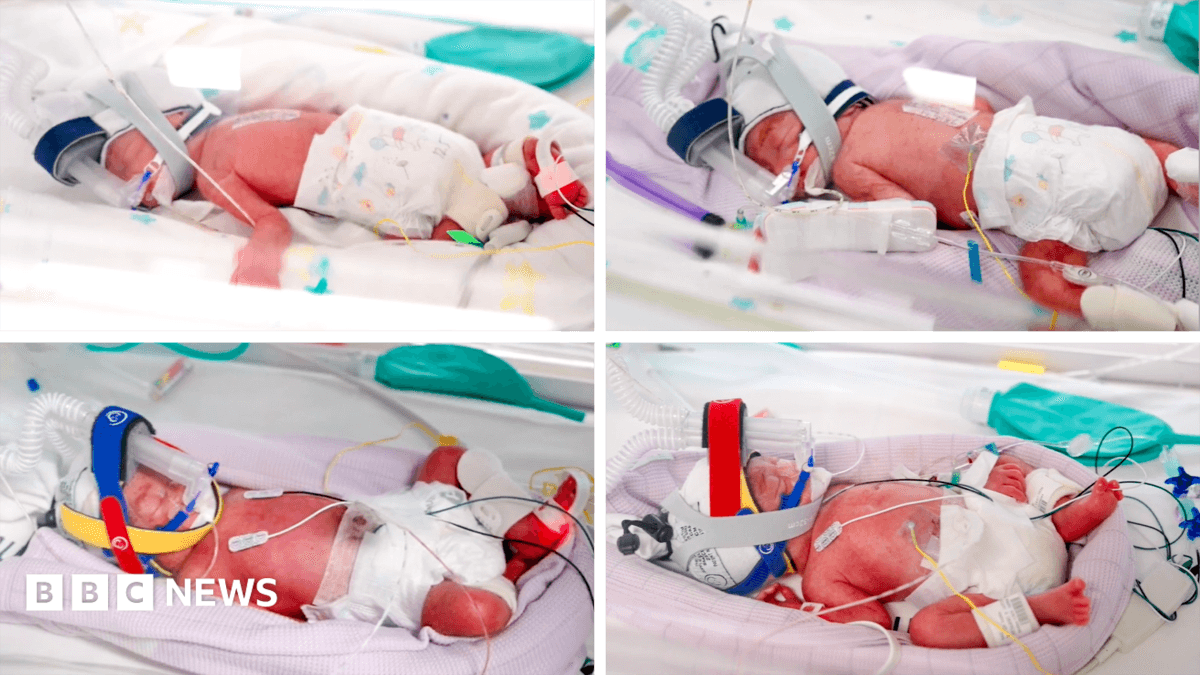
Inside the worst places on Earth to give birth, the muted beeps of the neonatal intensive care unit are drowned out by a sudden scramble of sound. A bundle is rushed into the corridor of this hospital in the Central African Republic (CAR) with a gaggle of people in its wake. Under the swaddle of cloth is a newborn baby girl, eyes closed, her chest heaving with tortured, syncopated breaths.
Nurses quickly connect the baby up to a confusion of monitors, tubes and drips. A roar of a ventilator kicks in. The baby’s grandmother looks on anxiously.
Emmaus Johann, the doctor and seventh-year medical student, looks grimly at the statistics on the monitor. They have tried intubation, ventilation and now CPR. Blood is seeping onto the blanket.
The newborn’s face goes grey. Her tiny body gives in. “There was no ambulance.
The only ambulance had taken a different child. There is nothing else out there, the doctor says as the baby’s grandmother shatters into sobs in the background. “They came just like that... by motorbike, he continues, trailing off.
This is the only dedicated paediatric hospital in the whole of the CAR, a small landlocked country of five million people that suffers from some of the highest maternal and early infant mortality rates in the world. This little girl has been brought in from a rural area 10km outside the capital. After a difficult labour, she was struggling with birth asphyxia.
She had been on this Earth for about two hours, and had spent almost all of it on the back of a speeding motorcycle in the desperate rush to get here. “There’s a lack of equipment and care. There should be a neonatology service out there.
But there isn’t one, Dr Johann continues. “If the baby comes to us this late without oxygen, we cannot resuscitate her; it’s part of our daily routine, he adds quietly. And the fear is this horrific situation is only going to get worse.
For centuries, giving birth was one of the most dangerous conditions a woman could go through: mothers and their babies died regularly in childbirth. But over the last 25 years, that changed. Combined global efforts saw maternal mortality plunge by 40 per cent.
Now, the United Nations, aid agencies and humanitarian organisations are all sounding the alarm that progress is stalling, and in some cases reversing, across the world, including even in the UK. The biggest factor is unprecedented aid cuts, first triggered by Donald Trump’s gutting of USAID in 2025, followed by European countries, including the UK, channelling foreign aid into defence. Compounding the crisis is an unprecedented level of conflict worldwide.
Researchers say that 2025 saw the highest number of conflicts between states since World War II, and the highest number of fatalities recorded since the Rwandan genocide. Although there is no aggregated global data since aid cuts were introduced last year, the signs are grim. In the CAR, not only does it struggle with some of the highest maternal and infant mortality rates in the world and its own internal conflict, it is now dealing with an influx of refugees from neighbouring war-ravaged Sudan.
Women in the CAR are 60 times more likely to die in pregnancy or childbirth than in the United Kingdom, according to the United Nations’ latest data. For every 100,000 births in the country, 829 women die. At the only paediatric hospital in the country, Dr Kango Semplice, head of the emergency department, says this is translating into deaths.
“The cuts were sudden. The country had just been getting back on its feet after conflict. We’ve had no funding since last year.
With the little money that we have, we are targeting the children that can be treated free of charge. I can assure you there will be deaths, both among babies and their mothers. Among the projects slashed were programmes led by the United Nations Population Fund (UNFPA), which lost $3m in funding alone.
New data shows 11 million people have lost access to their essential sexual and reproductive health and protection services. Almost 1,100 health facilities and mobile clinics were forced to close, while an additional 727 facilities were disrupted, operating with reduced staff, limited hours or shortages of medicines and supplies. Almost 6,000 health service providers lost their jobs, including frontline health workers and midwives.
“When services get shut down, when maternity wards close, the mortality rate rises. It’s as simple as that, explains Monica Ferro, head of UNFPA in London. “That will mean that they will have no skilled birth attendants.”””””””
Source: Independent World