
Environment
🇬🇧 United KingdomLaw Enforcement Agencies Have Lauded the Program As a Meaningful Tool.
BIRMINGHAM, Ala.
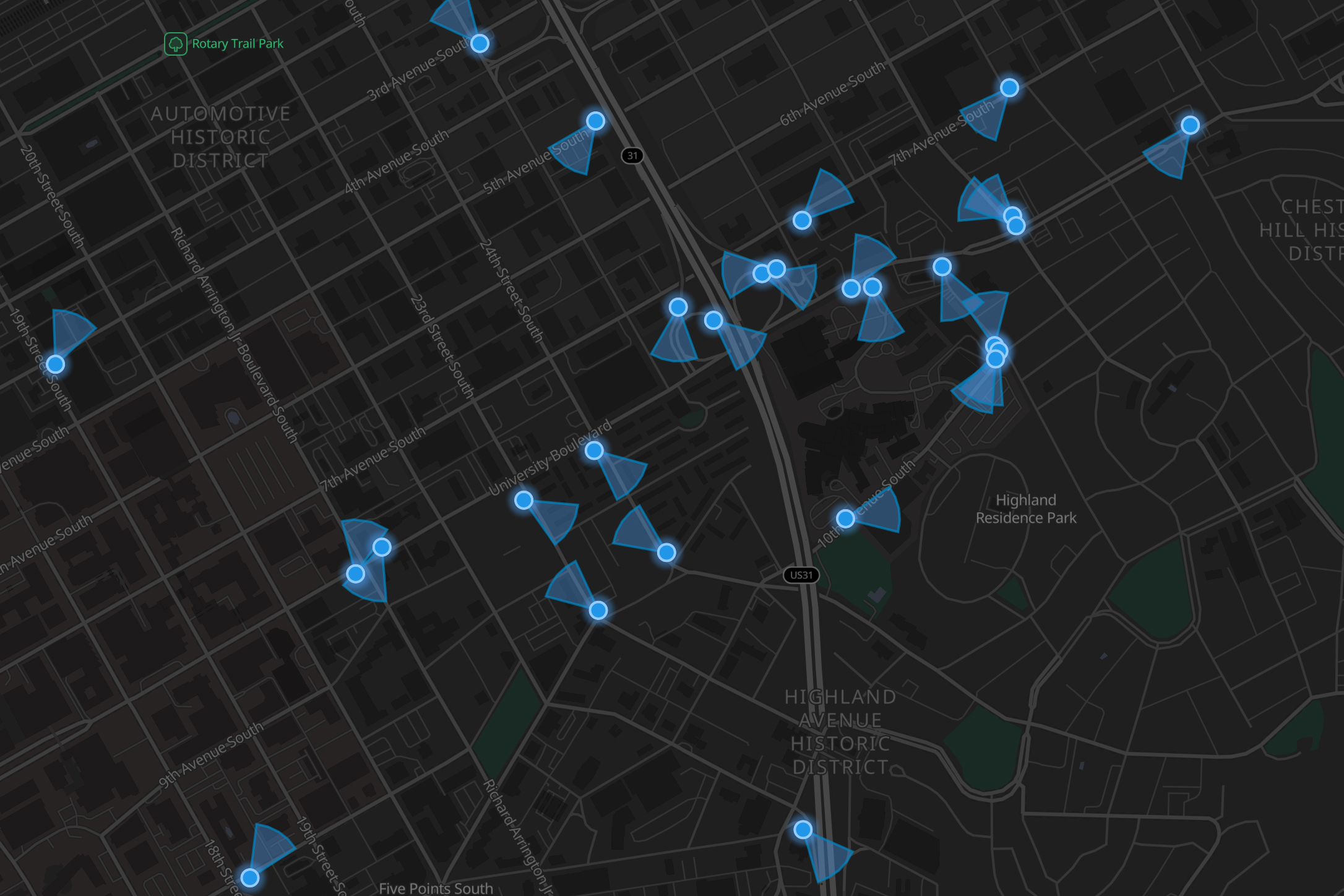
BIRMINGHAM, Ala. — Darrell Nance, a longtime resident and founder of DeFlock Birmingham, can point out the surveillance cameras mounted on power poles every few blocks across the city. He knows he's being watched, and he says everyone else is too.
Across Alabama and the country, local governments, businesses and homeowners associations have increasingly turned to companies like Atlanta-based Flock Safety to provide camera infrastructure and automated license plate readers (ALPRs) in a stated effort to improve public safety and solve crime. The result, residents and surveillance scholars say, is a network of interconnected systems that go far beyond gas station CCTV, allowing anyone with access to the data to search millions of records of time-stamped, location-specific information such as license plates, vehicle make and model, and identifying details like bumper stickers. A concern unique to Alabama, experts say, is the relationship between surveillance companies and the state's massive investor-owned utility, Alabama Power, which Flock has called its "longest-standing reseller" as recently as this year.
Since at least 2019, the power company has marketed ALPRs and other surveillance equipment to local governments as a convenient way to improve public safety, installing the cameras on its own power poles and adding the cost as a line item on the local government's power bill. A company representative confirmed in 2025 that Alabama Power has partnered with more than 80 municipalities across the state to provide subscription-based surveillance services from Flock and similar companies. Law enforcement agencies have lauded the program as a meaningful tool.
But residents like Nance and surveillance scholars say the relationship comes with strings attached. "I would think there are Alabama Power customers who would be alarmed that sensitive location data, including the ability to track individuals across time and space—is being collected and shared in ways that they may not realize, said Elizabeth Joh, the Martin Luther King Jr. professor of law at the University of California, Davis, who studies policing and technology. Nance, a community organizer and data analyst, has worked for months to get substantive answers from elected officials about contracts between local governments, Alabama Power and companies like Flock, with limited success.
"I don't think they really care, he said. "They're more worried about their relationship with people like Alabama Power than their relationships with constituents. Alabama Power declined to answer specific questions but spokesperson Alyson Tucker said in a written statement that the company "works with customers such as municipalities, businesses and community organizations to provide technology services and related equipment supported by our existing electric infrastructure.
She added that Alabama Power installs and maintains equipment but does not operate the system or have access to data, and that program participants own the data collected. Data, aggregated from open records requests and public databases, shows dozens of cities across Alabama have adopted Flock or similar surveillance equipment. The records, dating back as far as 2020, document more than 3 million instances of searches by customers with Flock access in the state.
Misuse of data collected by companies like Flock has already made headlines across the nation, including in Alabama. This story is the fifth in a series about Alabama Power's influence over electric rates, renewable energy, pollution and politics in the state. This story is part of the series Wired for Profit.
Source: Inside Climate News
- United Kingdom
- Environment
- Law
- Law Enforcement
- Enforcement Agencies
Most read in this category
Loading article…