
Economy
🇨🇱 ChileData From the National Agency for Statistics and Demography (ANSD) and UN Women Also Help Assess Women's Economic Weight.
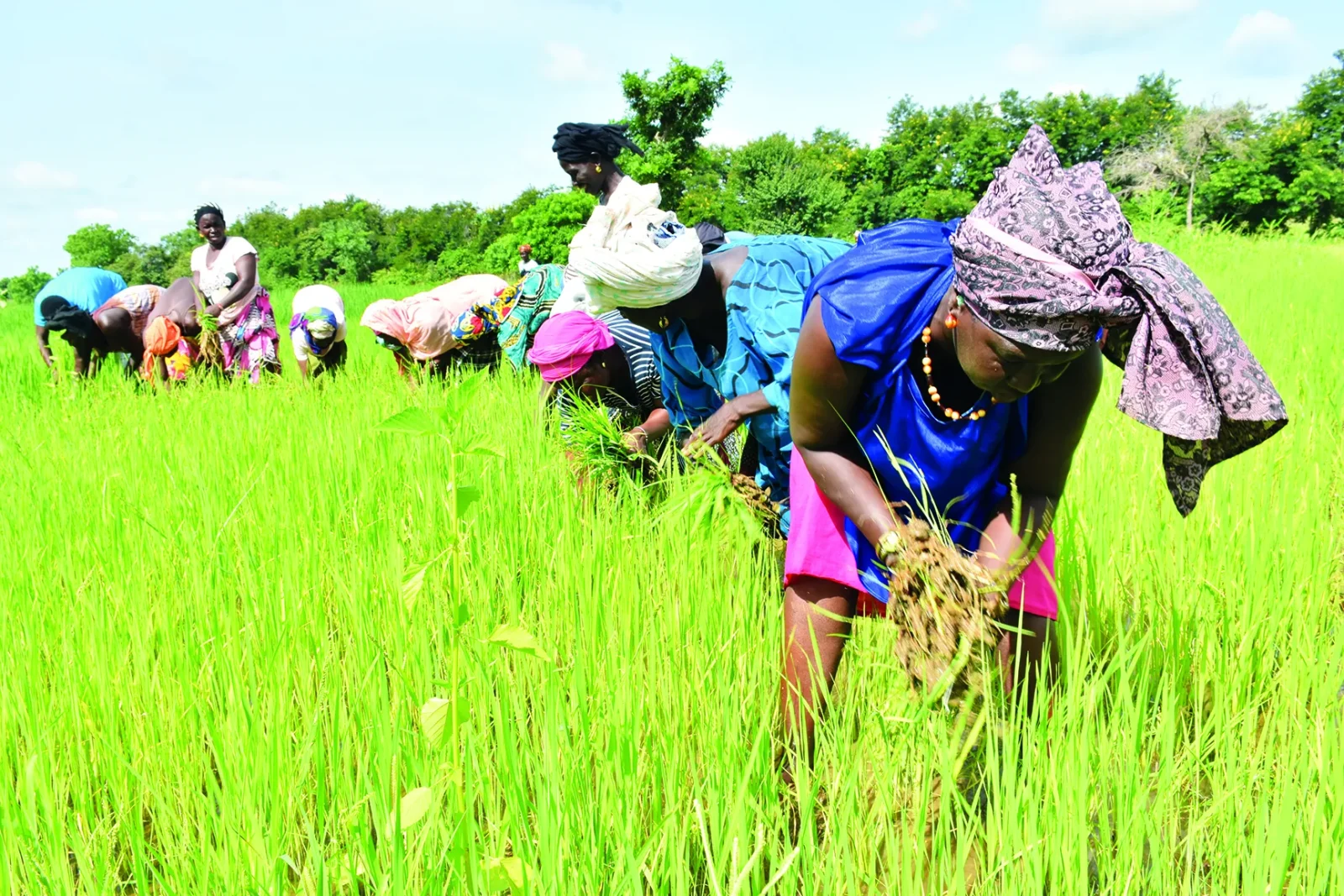
Rural women in Senegal contribute heavily to agriculture yet face deep land, financial and material inequalities, holding only about 12% of agricultural land nationwide, according to studies by Ipar. Despite their central role in farming, women own a small share of land and earn significantly less than men from their activities, making access to land one of the main structural inequalities they face. "This result is close to that of the 2024 Annual Agricultural Survey, revealing that women represent 15% of farm managers in Senegal, said Marame Cissé Sow, who also noted that only 2.7% of women hold an individual title to the land they farm, and 24.3% of women surveyed said they hold rights to agricultural land, compared with 40.5% of men.
Meanwhile, 40.4% of women access land mainly through borrowing, versus 15.7% of men, and only 41.5% of women with land access obtained it through inheritance, against 72.5% of men. The average area held by female-headed households is estimated at 1.82 hectares, compared with 4.57 hectares for male-headed households. Other Ipar research on the horticultural value chain in the Niayes, a major agricultural production zone, found that 96.3% of women surveyed take part in horticultural activities, versus 88.1% of men, said the coordinator of the "Youth, women and entrepreneurial strategies and mobility" theme at Ipar Think Tank.
Ndèye Yandé Ndiaye added that a lack of training is another limiting factor, with Ipar work showing that fewer than 3% of plot managers in the Niayes have received formal agricultural training, even though farming practices still rely heavily on family knowledge transfer. "Ipar results show that average national agricultural labor productivity is estimated at 3,524 CFA francs per workday. Female-managed farms show high productivity levels, said Ndiaye, coordinator of the "Inclusive governance of natural and land resources" theme.
This contrasts sharply with income levels: women producers earn on average half as much as men from farming, 395,887 CFA francs versus 839,888 CFA francs, the Ipar researcher noted. The researchers said available statistics mainly cover farm heads or plot owners, leaving much of the work done within family farms invisible. Data from the National Agency for Statistics and Demography (ANSD) and UN Women also help assess women's economic weight.
"This contribution of women to agriculture, long underestimated, is beginning to be solidly documented. This paradox highlights their capacity for action and their decisive role in agricultural production and food security of family farms, said Dr. Marame Cissé Sow and Dr. Ndèye Yandé Ndiaye. They attribute the income gap mainly to unequal access to productive resources.
Experiments in the Niayes show that women with better access to land, adapted financing mechanisms, solar energy and technical training improve their productivity while increasing their incomes. Ipar also stresses that available statistics do not always capture all activities of rural women, since much of their work falls in the informal sector or family farms. "The statistical invisibility of rural women in agriculture is not a reflection of their absence, but of the limits of our data systems, said Dr. Marame Sow. The researchers welcomed progress with the gradual integration of sex-disaggregated data in agricultural surveys, saying such information is essential for better guiding public policy.
Source: Le Soleil SN RSS
- Chile
- Economy
- Data
- National Agency
- Statistics
Most read in this category
Loading article…