
Science
🇬🇧 United KingdomThe ODIN Reactor Is Designed to Remain Compact and Transportable Through Specific Mechanical and Physical Principles
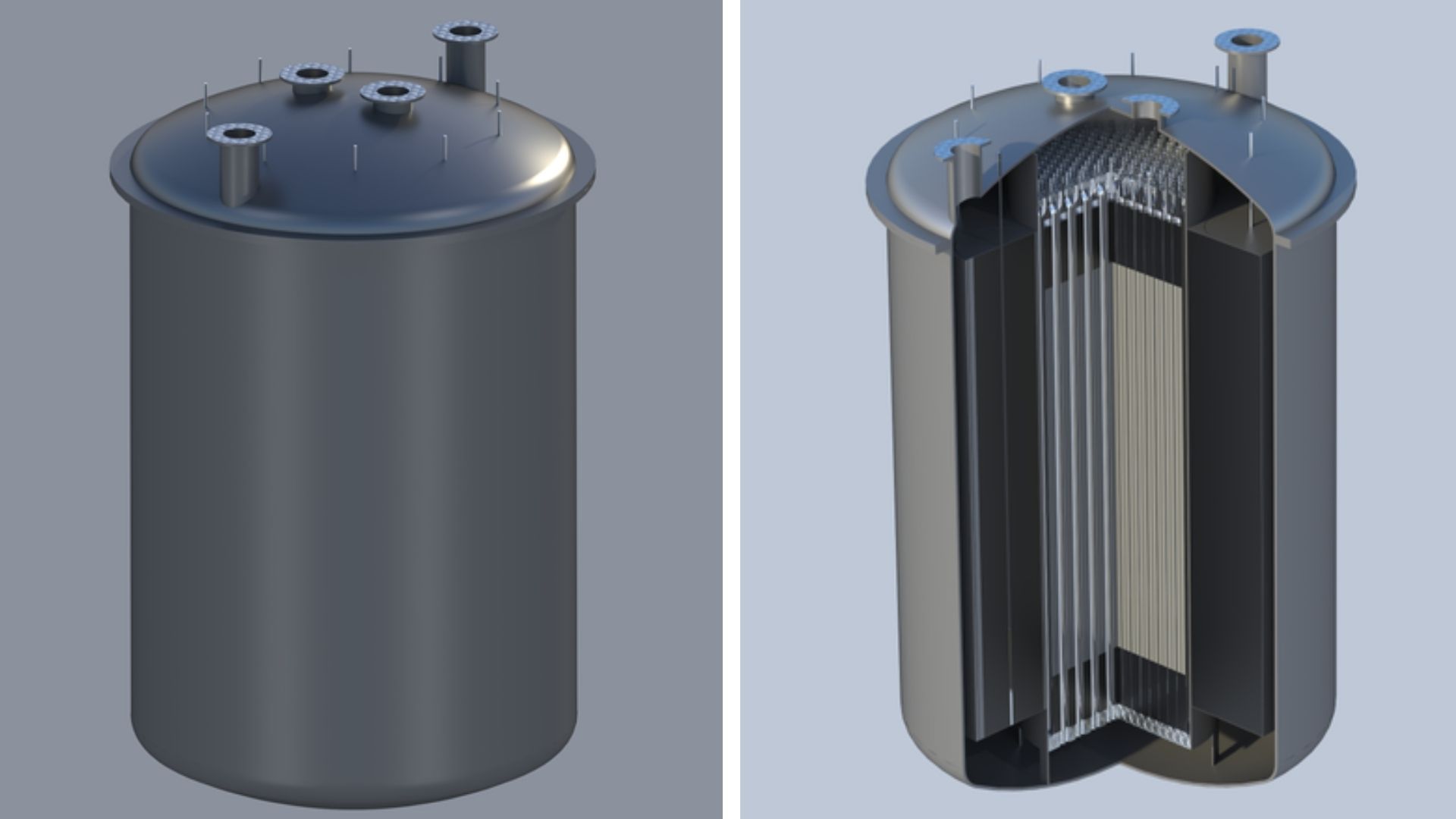
Engineers at Cambridge Atomworks have begun experimental testing of the ODIN micro-reactor at a new facility in Granta Park, Cambridge, UK. The site includes a dedicated high-bay workspace and chemical laboratories, which will be used to build large non-nuclear test rigs and study the reactor's primary engineering systems. The ODIN reactor is designed to remain compact and transportable through specific mechanical and physical principles.
It uses a liquid salt coolant instead of pressurized water, allowing it to absorb high levels of thermal energy while operating at low pressures. "The high fidelity required in the safety qualification of pressure vessels in more conventional water-based reactor concepts is a large safety and cost concern, explained Cambridge Atomworks. Low-pressure salt systems eliminate the need for heavy containment structures.
Inside the reactor core, the nuclear fuel and neutron moderator are placed together in the same physical unit, a co-located layout that uses internal space efficiently and reduces core volume. The design draws on a fuel concept first developed by General Atomics during the 1950s Atoms for Peace initiative, later deployed to research reactors in more than thirty nations. Safety systems use ambient air as the final heat sink rather than large bodies of water, allowing the plant to operate in remote or dry regions without a nearby river or lake.
If power stops, natural convection continues to move the molten salt through internal circuits, while the auxiliary air cooling system relies on natural air circulation to carry residual heat away from vessel walls. Researchers at Granta Park are studying the thermal and chemical properties of the coolant using an STA-MS system. "These properties, relating to fuel performance, are being characterised utilising a state-of-the-art STA-MS system which enables simultaneous thermogravimetric, heat flow, and mass spectrometry analysis, noted the company in a press release.
The team has also assembled physical test rigs to study fluid movement and heat dissipation under realistic conditions, including a prototype air-cooling rig to test passive safety systems. Data from these non-nuclear trials provides baseline measurements to check the accuracy of digital computer models. A corrosion rig will soon be added to test candidate alloys against hot fluids over time, helping engineers select verified materials for the reactor vessel before testing operational control systems. It will allow us the space and height to build our demonstrator rigs and the chemistry facility will give us the analytical platform to investigate the chemical processes inherent in our reactor system, which will accelerate the completion of the ODIN design, concluded Ian Farnan, CEO at Cambridge Atomworks.
Source: Interesting Engineering
- Nuclear
- United Kingdom
- Science
- The ODIN
- ODIN Reactor
Most read in this category
Loading article…