
Science
🇸🇩 SudanAstronomers Have Discovered an Unusual Exoplanet About 335 Light-years From Earth, Where Roughly Half of Its Mass Is Made Up of Water
The planet, designated HD 176071 b, orbits its host star HD 176071 at an extremely close distance, completing one full orbit in just 14 hours. HD 176071 b is about 2.5 times the size of Earth and 8.5 times its mass. Scientists describe it as one of the rare "hot ocean worlds.
The planet sits approximately 2.4 million kilometers from its star, exposing it to intense radiation and strong gravitational tidal forces. These tidal effects are slowly dragging the planet toward its star, where it is expected to eventually be destroyed. The exoplanet lies in a region known as the "Neptune Desert, an area where Neptune-sized planets in very close orbits around their stars are extremely rare.
Despite the intense radiation, HD 176071 b has managed to retain its atmosphere, which has drawn further scientific interest. A research team led by Sylvain N. Breton of Italy's National Institute for Astrophysics compared data from the Kepler and TESS space telescopes. The analysis revealed that dense, highly reflective clouds form at the planet's cooler boundaries.
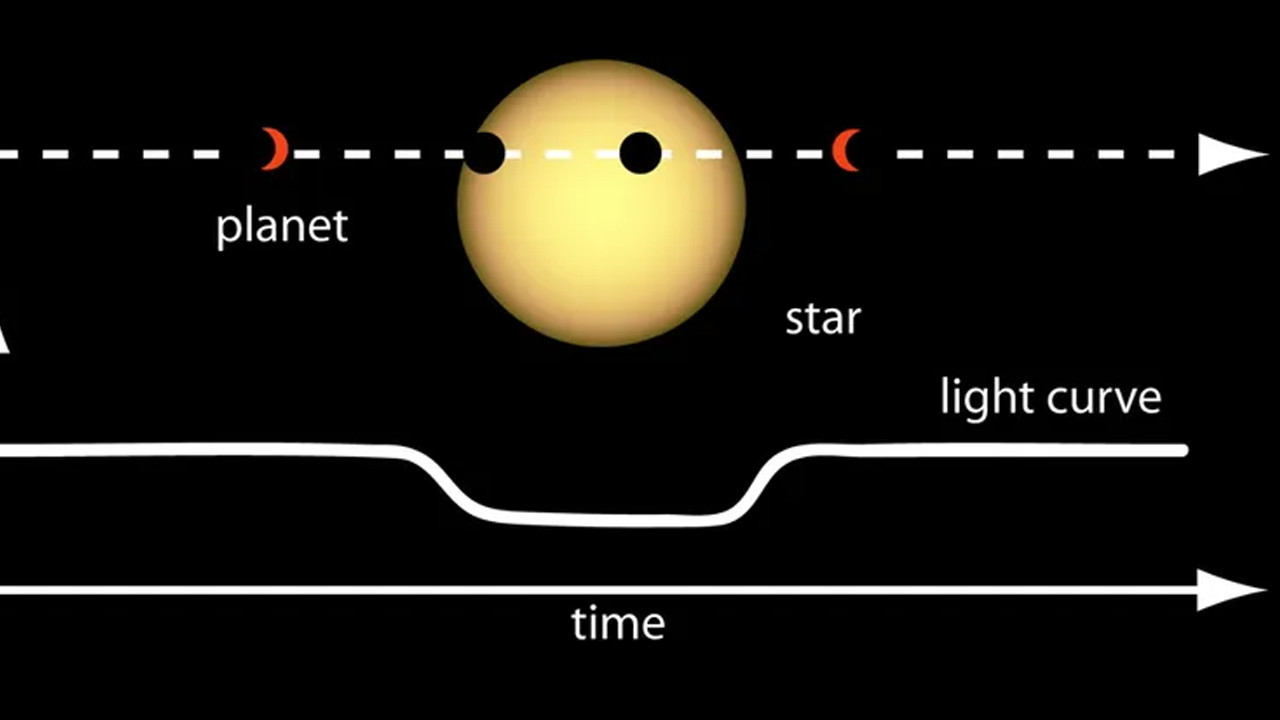
The movement of these clouds indicates the atmosphere has a constantly changing, dynamic structure. Because HD 176071 b does not pass in front of its host star as seen from Earth, it could not be detected using the traditional transit method. Instead, researchers used the light reflected by the planet.
Due to tidal locking, one side of the planet always faces its star while the other faces dark space. The resulting light variations were precisely measured with the HARPS-N spectrograph at the Galileo National Telescope. The study, published in the journal Astronomy & Astrophysics, offers a different approach to examining the atmospheres and internal structures of exoplanets that do not transit their stars and cannot be directly observed. The discovery of HD 176071 b highlights a new method for investigating such distant and unusual worlds.
Source: Chip TR
- Sudan
- Science
- Astronomers
- Earth
- Astronomers Discovered
Most read in this category
Loading article…