
World
Telecom Networks Hit a Limit As Bit Transmission Outpaces Meaning
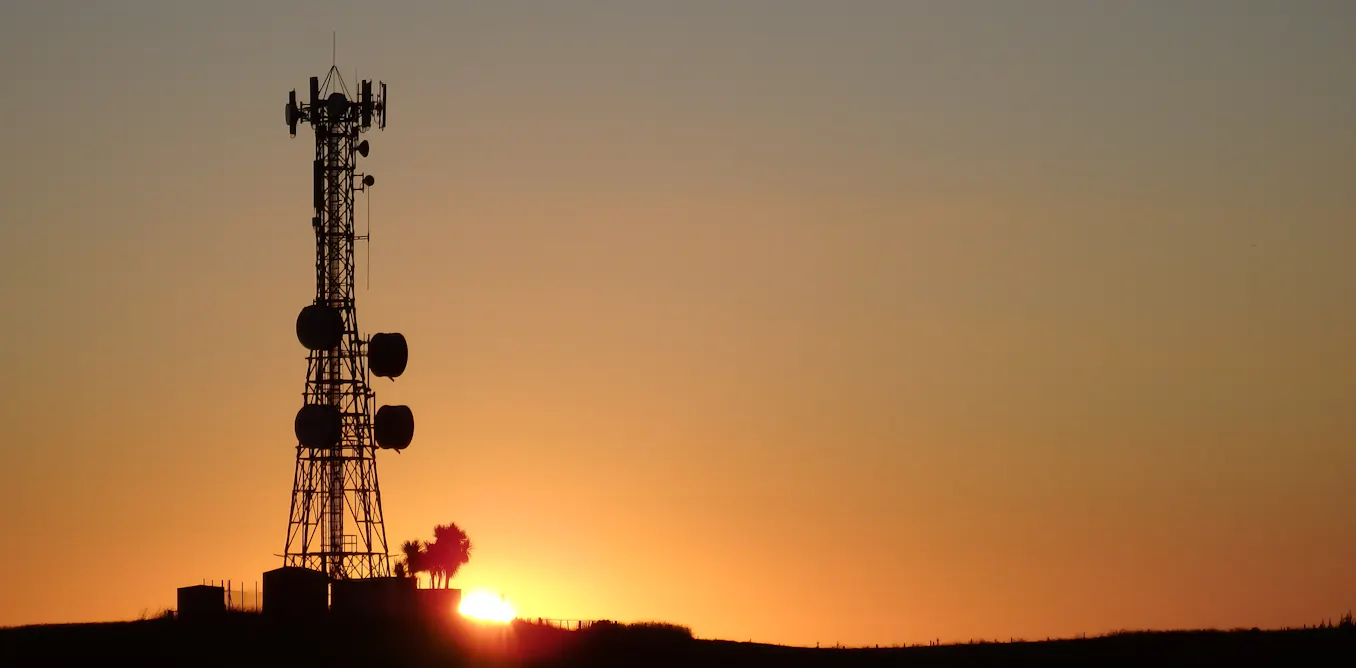
For decades, telecommunications engineers and researchers have pursued a single goal: transmitting more information, faster, and with as few errors as possible. Whether it's a voice call, a video, a message, or even a sensor reading, all data is digitally encoded as sequences of 0s and 1s, called bits. This sequence is then converted into electromagnetic signals transmitted via radio waves.
Simply put, current networks do not carry the meaning of a message, but a binary representation. This logic has been extraordinarily effective. It enabled the advent of 2G and SMS, 3G with mobile internet, 4G and online video, and then 5G, which improves speeds, reduces latency, and connects many devices.
But today it is hitting a limit: continuing to gain performance requires ever more bandwidth, antennas, computing power, energy, and infrastructure, in a world that is nonetheless finite. Are we seeing the end of our model? Since the 1950s, much of telecommunications engineering has been built around a fundamental question: how much information can be transmitted per second, reliably? The main difficulty is that a transmission always suffers external disturbances, known as noise.
Source: Conversation France
- World
- Telecom
- Telecom Networks
- Networks Hit
- Hit Limit
Most read in this category
Loading article…