
Health
🇸🇬 SingaporeOverprescription Is Another Quiet Crisis Addressed by the Hospital
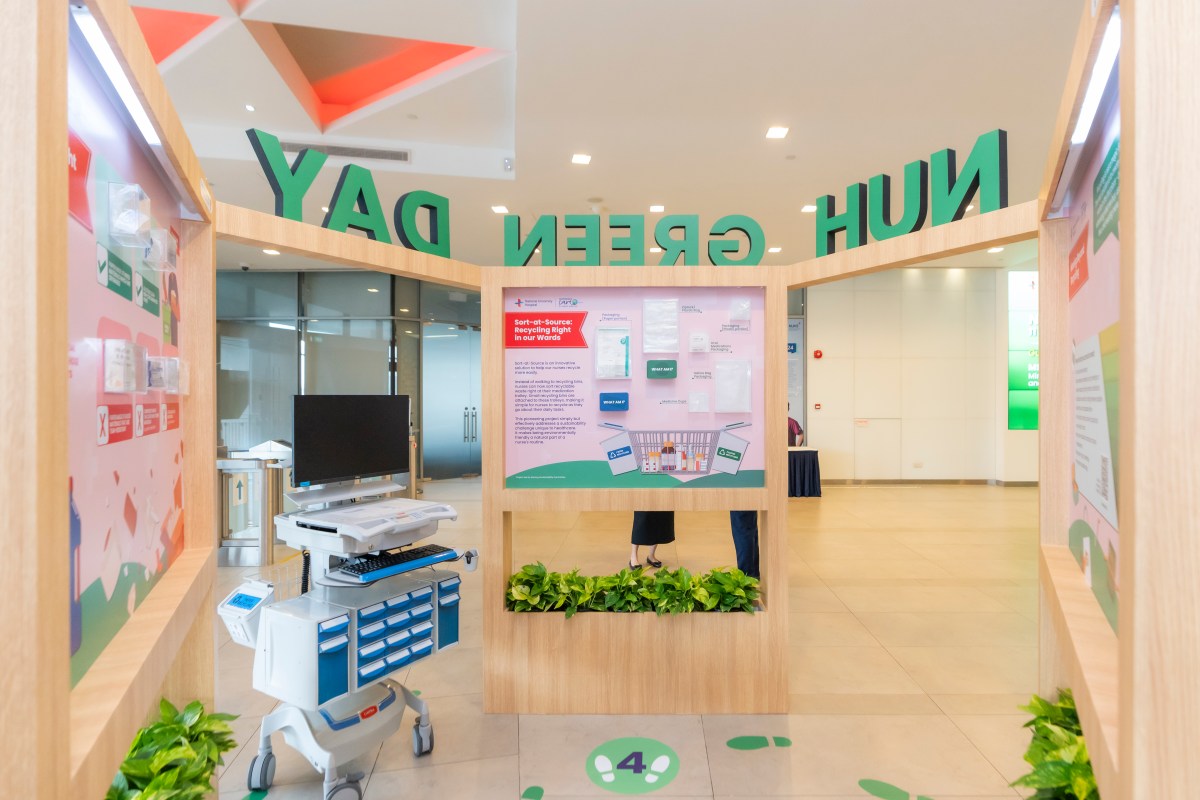
Clinical excellence and environmental responsibility are not competing priorities — they are the same, according to Aymeric Lim, who argues that the healthcare sector's role in healing people is undermined by its own environmental footprint. Globally, healthcare accounts for four to five percent of all greenhouse gas emissions, running round-the-clock operations, consuming vast energy and water, and generating hazardous and non-hazardous waste in volumes most industries would find indefensible. In 2025, the National University Hospital, Singapore (NUH) became the first hospital in the world to receive the Healthcare Sustainability Certification, awarded jointly by the Joint Commission International and the International Hospital Federation's Geneva Sustainability Centre.
Lim, who leads the institution, said the certification clarified that sustainability is not a side project or a marketing line, but a test of whether hospitals can be advanced in every sense of the word. Contrary to the assumption that going green means trading off clinical performance, infection control, or innovation, NUH's experience has been the opposite. In 2021, the hospital began transitioning away from desflurane, an anesthetic gas with a global-warming potential 2,590 times more potent than carbon dioxide.
By switching to sevoflurane, which is about twenty times less harmful, and the intravenous alternative propofol where clinically appropriate, NUH saved more than 1,900 tons of CO2 emissions and over $577,000 in costs between April 2021 and March 2023 — roughly equivalent to taking 680 cars off the road, with no patient outcome compromised. Overprescription is another quiet crisis addressed by the hospital. By rewriting prescription guidelines and implementing a compliance tracking system for antibiotics in wisdom-tooth surgeries, NUH reduced prescription rates by nearly 70 percent while keeping infection rates below one percent, avoiding around 14,700 kilograms of CO2 emissions.
In low-risk outpatient clinics, the hospital cut the use of 137 rolls of couch paper per month, saving more than 500 kilograms of emissions and freeing up clinic time, while adopting more absorbent incontinence pads in higher-risk clinics. The Sort-at-Source recycling initiative placed two bins on nursing trolleys — one for paper, one for plastic — making recycling the easier path. In a two-week pilot across three inpatient wards, paper recycling rose 47 percent and plastic recycling by 230 percent.
Together, these initiatives lowered emissions per patient by five percent between 2022 and 2023. NUH's commitment is to raise its overall recycling rate to 60 percent of all waste produced by 2030, up from around 10 percent today. As NUH plans its 2038 redevelopment, sustainability is being designed into the building's bones with green healing spaces, solar panels, green roofs, vertical greenery, smart building management systems, and energy-optimized infrastructure — not added at the end like a certification sticker. Lim's message is clear: sustainability is a quality improvement, and the most advanced hospitals must also be the greenest.
Source: Newsweek
Most read in this category
Loading article…