
Education
🇨🇳 ChinaAbout 30 University Students Are Coding in Front of Chen in China
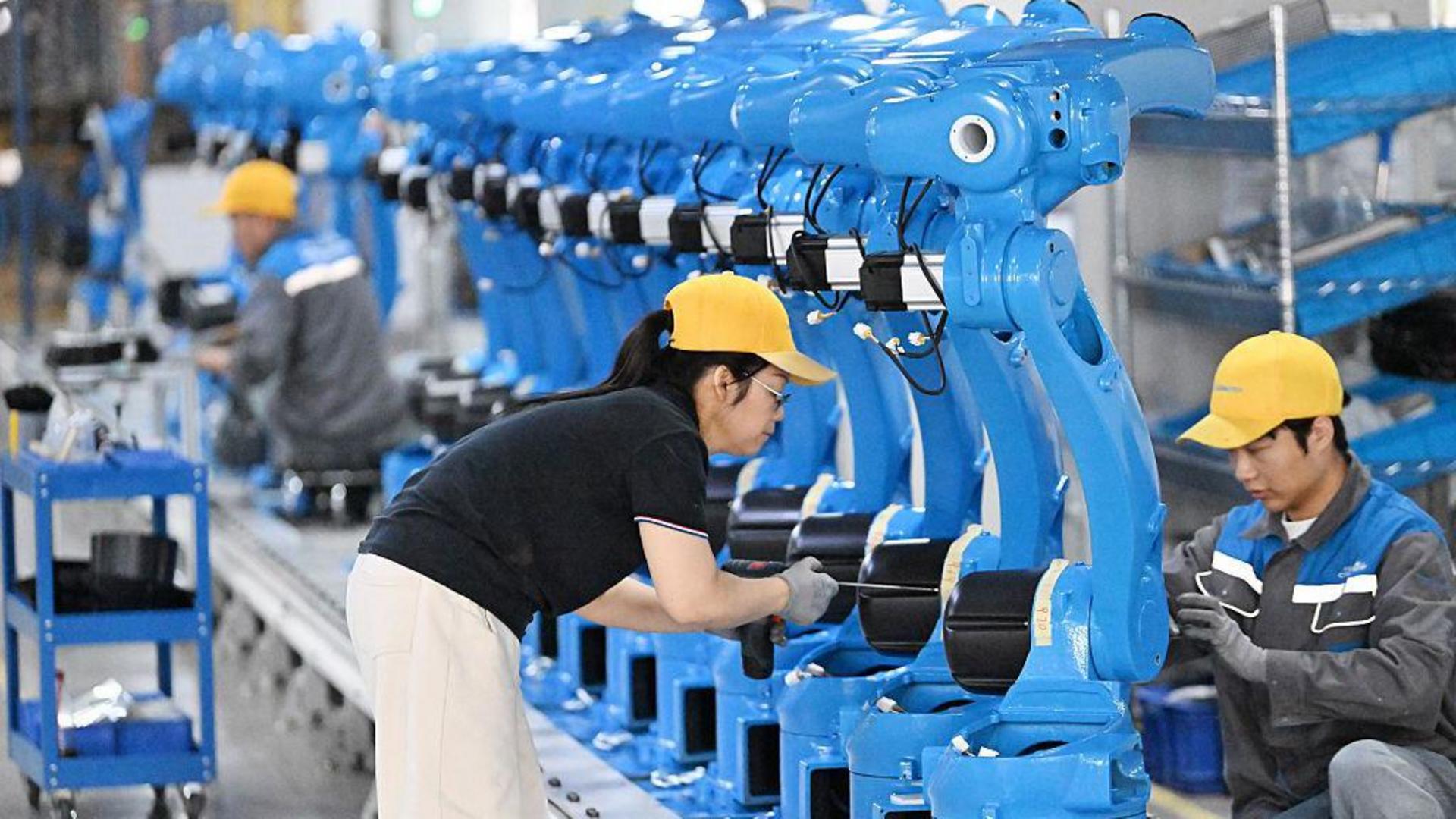
China's quiet 'machine revolution': Millions of robot workers While humanoid robots that run, jump and leap at games serve as a showcase of technological revolution, China's real robot revolution is happening out of sight, inside factories and classrooms. Chen Tianyu, a 28-year-old academic, says, "I doze off a bit and meanwhile the world is changing. Chen spends his free time in factories that are transitioning to automation, studying the latest technologies.
This allows him to stay on top of topics he should prioritize in his AI and robotics-themed courses. About 30 university students are coding in front of Chen. One of them, with eyes darting between the screen and the robot, writes code fervently: "The robot needs to pick up that cylindrical part and move it there, he says.
On one side of the classroom, a row of industrial robots awaits programming; on the other, students are trying to develop robotic medical devices. As Chen guides them, he says, "If you are not among those needed in the world of AI and robotics, you will definitely be among those eliminated. For the students in the spacious classroom, this is a step, or rather a leap, toward a future China is meticulously building.
President Xi Jinping has launched a $20 billion plan to place his country at the forefront of innovation and in direct competition with the US. Evidence of this plan is everywhere. The students are at Hangzhou Technical Institute, one of the specially built massive vocational schools aimed at training a new generation of tech-savvy engineers.
The campus sits on the outskirts of Hangzhou, a city whose futuristic skyline hints at its status as a global tech hub. More than two million robots work in factories across the country — a number larger than anywhere else and growing at an extraordinary pace. China already exports its robots worldwide, and more than half of the world's industrial robots are made in China.
The consequences of such extensive automation in a country at the heart of global production, trade and innovation remain unclear. For instance, what will this change mean for China's human workforce? The future of manual laborers in this industrial revolution is uncertain.
Last weekend, China hosted the second World Humanoid Robot Games, where robots ran, jumped and leaped. The force behind this flashy display is a less visible revolution unfolding inside factories and classrooms. BBC visited industrial facilities across the country and examined robots that do not look human, dance or jump on stage, but weld, paint, assemble, lift and lower — working day and night without breaks or benefits.
Some of these robots are tasked with building more robots. We also visited new academies training people to work alongside this robotic workforce, getting a firsthand look at what Xi calls "new productive forces" and how they might reshape the country. In a factory in the southern city of Chengdu, "old and new" work side by side on a production line.
About 30 middle-aged workers screw, drill and polish robotic arms — a leading product of CRP Technology that performs various industrial tasks — while four young engineers huddle around a console, trying to debug a new robot prototype they hope will help build other robots. One of them is 31-year-old Pang Kai, from the R&D team, who carries a skeleton across the room. China's future workforce is not yet ready for a flashy debut; it can perform simple, repetitive tasks like scanning QR codes.
Pang says with a slightly embarrassed smile, "Maybe in six months it can do other tasks. It is a long road, and every small win is a cause for celebration for the team. CRP Technology, with about 300 employees, has been producing robotic arms for nine years.
Each arm can be tailored to a factory's needs to help produce cars, electronics or wind turbines. The company says a single arm can be programmed to perform more than 90% of repetitive tasks. Engineers wonder whether these robots could one day replace the entire factory workforce. The implications for human labor in China remain uncertain as the world witnesses this industrial revolution.
Source: BBC Türkçe
Most read in this category
Loading article…