
Crime
Emma, a Young Jewish Woman Who We Met in 2019, Didn’t Belong to a Synagogue
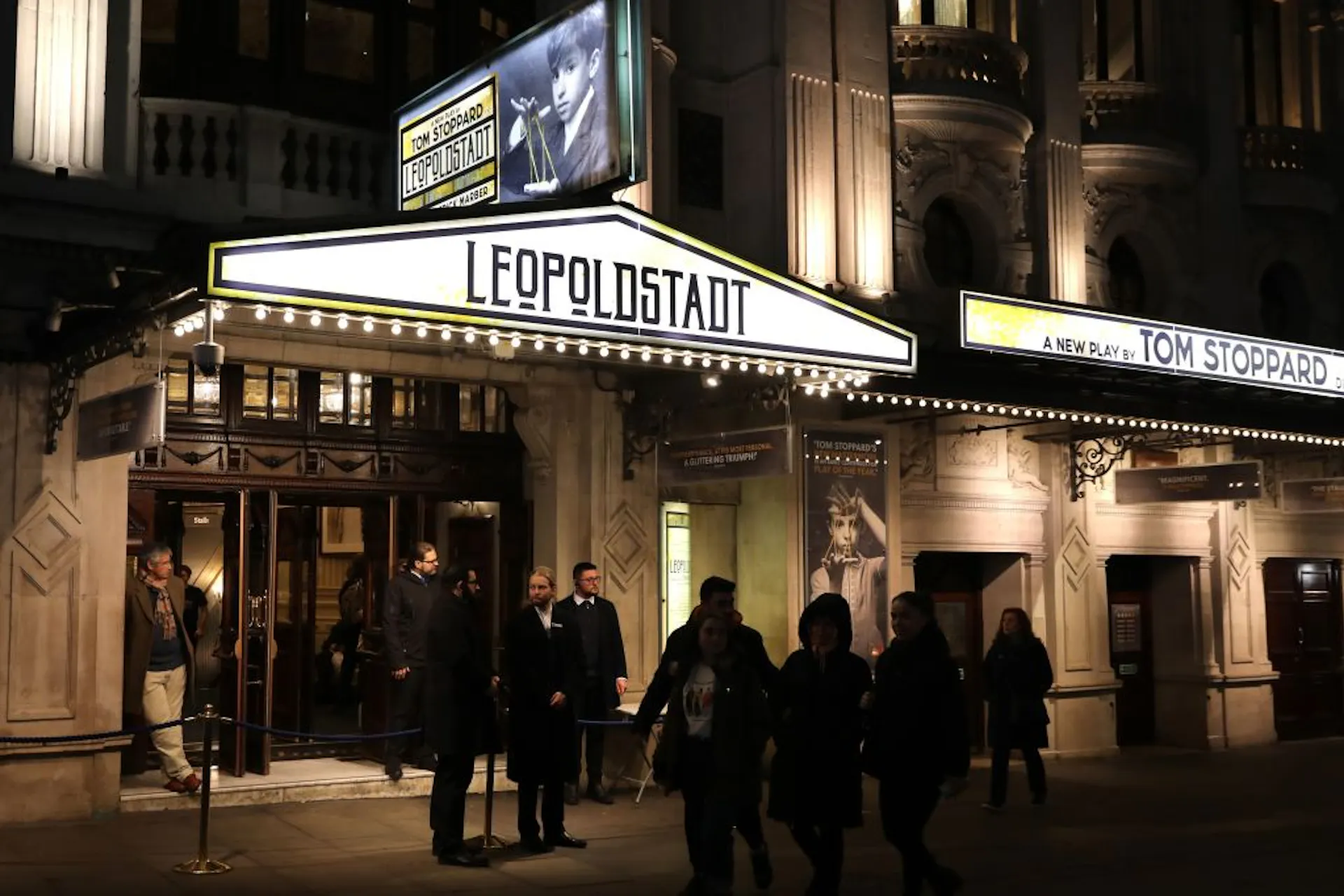
Theatergoers arrive for 'Leopoldstadt, a play about several generations of a Jewish family in Vienna, at Wyndham's Theatre in London in 2020. Isabel Infantes/ via. “Emma, a young Jewish woman who we met in 2019, didn’t belong to a synagogue. She didn’t have a Jewish partner.
She didn’t observe Jewish rituals regularly. On most surveys about religion, she would not seem very engaged with Judaism. But as Emma talked about what she did in her free time, a very different picture began to emerge.
She visited Jewish websites and enjoyed listening to Jewish music. She read books about Jewish topics and had recently attended a retreat for young Jewish adults to learn Torah while also doing yoga. She was highly invested in learning about Judaism, but she explored her identity without joining traditional institutions.
Most major surveys about religion ask whether someone belongs to a congregation, how often they attend services, whether they pray regularly and whether belief is important in their lives. Those measures help identify broad shifts, like the growing percentage of Americans who are religiously unaffiliated the nones. But many Americans’ religious lives, like Emma’s, are not disappearing; they are moving away from membership of traditional institutions.
To understand what religion looks like in 21st-century America, researchers may need to ask different questions. As scholars of Judaism and education, we have been exploring how people learn about religion beyond traditional places like synagogues, Jewish schools and summer camps. Between 2019 and early 2023, we spoke with hundreds of people and explored different leisure time activities to discover what people learn about Judaism and Jewishness through cultural arts.
We interviewed dozens of audience members at Jewish-themed shows on Broadway, such as Leopoldstadt” and Parade. We attended Jewish concerts and asked attendees what they learned. We explored how social media communities offer spaces to talk about different Jewish topics, like what fans learned about ultra-Orthodox Judaism from watching the television show Shtisel.
‘Shtisel,’ an Israeli series about an ultra-Orthodox family in Jerusalem, ran for three seasons. Our research revealed that there is a vibrant ecosystem of people learning about religion in their leisure time. Through the arts, both Jews and non-Jews encounter Jewish history, Jewish religious practices and representations of Jewish communities.
Most people we spoke with told us that they felt meaningful connections to Judaism during activities that would rarely appear on a standard religion survey. Joan, an unmarried woman in her 50s from Connecticut, told us that she was deeply invested in Judaism, but felt that synagogues and Jewish community centers were not welcoming to single people without families. Instead of joining a Jewish institution, she watched Jewish-themed TV shows and movies on Netflix, and joined social media communities to chat with other fans.
Luis, who lived in Boston but was born in Argentina, was a Sephardic Jew, a group that traces their ancestry and traditions to Jewish communities who once lived in Spain and Portugal. His wife was Ashkenazi, meaning her ancestors came from Central and Eastern Europe. She considered herself secular, and so the couple joined the Worker’s Circle, a nonreligious Ashkenazi institution rather than a synagogue.
Yet Luis loved deepening his knowledge of Sephardic culture, and he often attended concerts of music in Ladino, a Sephardic language related to Spanish, with other Sephardic immigrants. American singer Sarah Aroeste writes and performs in Ladino. For Joan and Luis, these activities were not peripheral to their Jewish lives. Rather, they were central avenues for learning and community.
Source: The Conversation
Most read in this category
Loading article…