
Economy
🇹🇷 TürkiyeRahmi İncetan, Chair of the Mediterranean Iron and Non-ferrous Metals Exporters' Association, Has Called for Maximum-level Foreign Currency
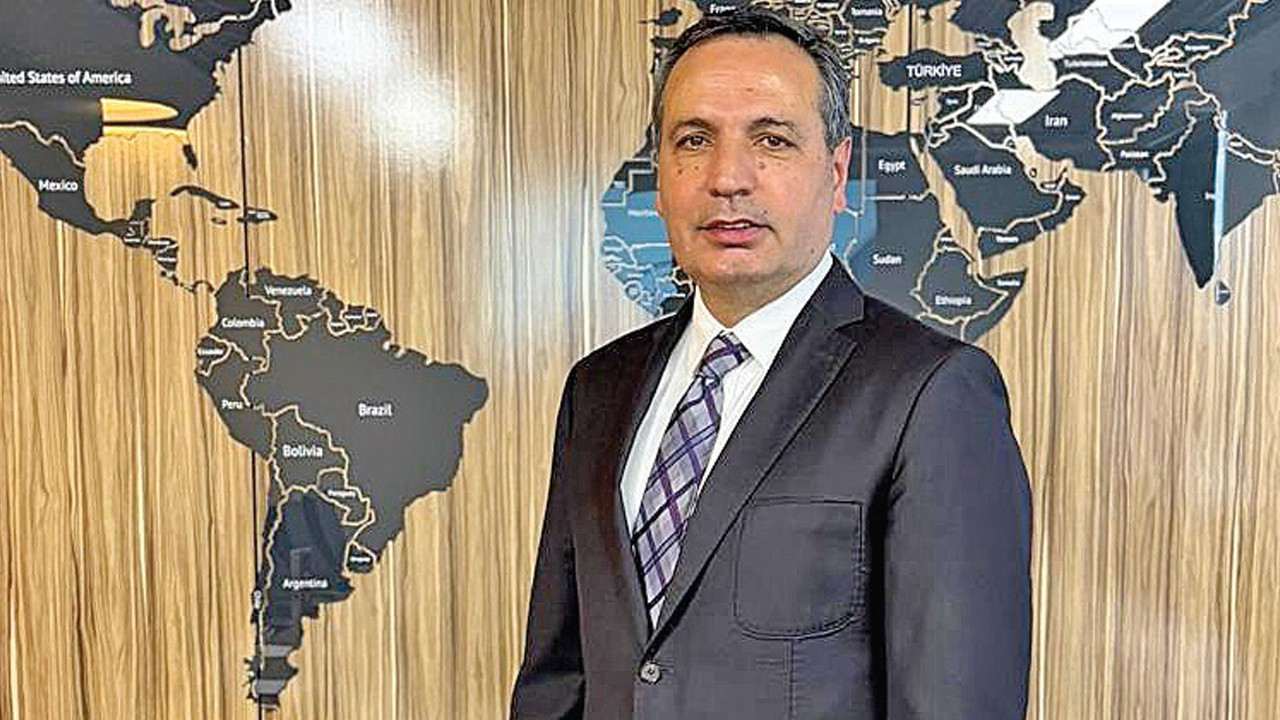
Foreign currency conversion support in these sectors should be provided at the highest possible level, İncetan said, adding that support mechanisms must be shaped by taking into account the real cost structures of sectors so that Turkey's exporting industries can maintain their competitive power in global markets. İncetan welcomed Trade Minister Ömer Bolat's announcement that foreign currency conversion support for exporters will continue and that new work will be carried out to enable labor-intensive sectors to benefit more from this support. He stated that the iron-steel and non-ferrous metals sectors should also receive top-level support under the new regulation.
Noting that Turkey's exporting sectors are under serious cost pressure in global markets, İncetan said competition is not limited to China alone, and that in some areas Turkey lags even behind European rivals. "Today we struggle to compete with China on price. But the problem is not just China; in some of our sectors we face higher production costs than even our European competitors.
We are fighting both China's low-cost production and losing our cost advantage against European rivals," he said. Emphasizing that labor costs, along with energy, financing, and logistics expenses, are decisive for industrialists' competitiveness, İncetan said this effect is even greater in energy-intensive sectors. "Labor costs constitute a significant burden, but evaluating them alone is not sufficient.
Energy costs also make up a serious portion of production costs. When labor, energy, financing, and logistics costs come together, the total cost pressure on our exporters weighs heavily, he assessed." İncetan noted that the iron-steel sector has a production structure requiring not only raw materials but also intensive labor and energy, and underlined that this situation is even more pronounced in the steel door sector. "In the iron-steel sector, qualified manpower is needed at many stages such as cutting, shaping, welding, surface treatment, quality control, packaging, and shipment.
Energy costs are also quite high. Therefore, the sector's labor intensity and total production cost should be evaluated together," he said. Drawing attention to the even higher share of labor in steel door production, İncetan said, "There are many labor-intensive stages such as cutting, bending, welding, grinding, assembly, painting, and accessory processes.
Our sector struggles to set prices in international markets due to increases in both labor and energy costs. Stating that the new regulation to be prepared by the ministry is an important opportunity, İncetan summarized his expectations: "The real cost structures of sectors facing high labor and energy costs, such as white goods, iron-steel, non-ferrous metals, and steel doors, should be taken into account. These sectors benefiting from foreign currency conversion support at the highest level would give our exporters breathing room.
Concluding with an emphasis on competition, İncetan said, Our demand is not a privilege, but a correct assessment of competitive conditions. Because every support that will reduce the pressure on exporters is of critical importance. These supports will protect our production and export capacity and contribute to Turkey reaching its export targets.
Source: Dünya Ekonomi
Most read in this category
Loading article…