
Environment
Such Comparisons Remain Approximate
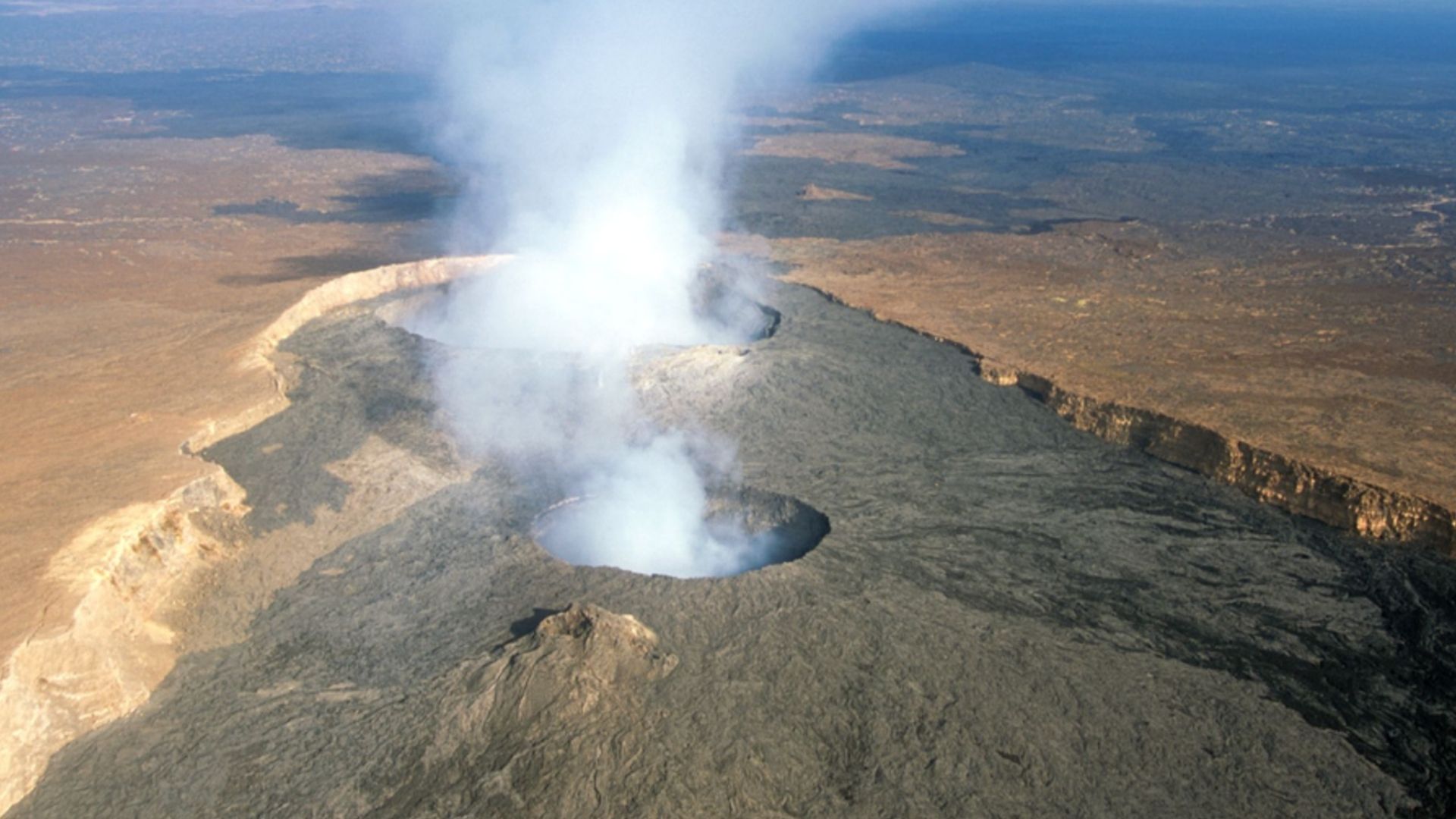
Some of the most explosive volcanic systems in the Solar System are not on Earth at all, and even terrestrial eruptions can dwarf anything recorded in modern history. A new ranking compares 10 of the most powerful known volcanic systems across planets and moons, weighing erupted volume, plume height, ejection speed, deposit extent, thermal power, and the strength of available evidence. Such comparisons remain approximate.
The Volcanic Explosivity Index (VEI) was created primarily for terrestrial eruptions and cannot be directly transferred to worlds with weaker gravity, thinner atmospheres, and different volcanic materials. On Earth, the Toba volcanic system produced one of the largest explosive eruptions in the geological record around 74,000 years ago. Newer estimates place the eruption at approximately 912 cubic miles (3,800 cubic kilometers) of dense-rock-equivalent material, though older calculations put the figure closer to 672 cubic miles (2,800 cubic kilometers).
The eruption also generated roughly 360 cubic miles (1,500 cubic kilometers) of pyroclastic-density-current deposits, and its ash is estimated to have covered around 15.4 million square miles (40 million square kilometers). Yellowstone's largest known eruption produced the Huckleberry Ridge Tuff approximately 2.1 million years ago, with more than 588 cubic miles (2,450 cubic kilometers) of volcanic material erupted during the VEI 8-scale event. The eruption caused the ground above the emptied magma reservoir to collapse, creating a caldera measuring more than 46 miles (75 km) in length.
Yellowstone is a volcanic caldera system rather than a single cone-shaped volcano. Taupō's Oruanui eruption occurred approximately 22,600 years ago, making it the youngest known VEI 8 supereruption. It produced around 281 cubic miles (1,170 cubic kilometers) of total tephra, with the amount of magma involved often estimated at approximately 127 cubic miles (530 cubic kilometers) as dense-rock equivalent.
The eruption reshaped the surrounding landscape and contributed to the formation of the caldera now partly occupied by Lake Taupō. Beyond Earth, Jupiter's moon Io hosts several of the most extreme volcanic systems. Pele is responsible for one of the largest directly observed extraterrestrial volcanic plumes, with spacecraft images recording its plume rising approximately 186 to 242 miles (300 to 390 km) above Io's surface.
Material falling from the plume has formed a sulfur-rich red ring about 870 miles (1,400 km) wide. Pele's magma reached temperatures of at least 1,600 degrees Celsius, while its lava discharge rate has been estimated at between 250 and 340 cubic meters per second. Tvashtar Catena has produced enormous lava fountains and plumes during several observed eruptions, with estimates placing the height of its largest plumes between approximately 217 and 258 miles (350 and 415 km).
Galileo observed high-temperature lava fountains at the volcanic center, and in 2007, New Horizons captured a plume extending around 217 miles (350 km) above Io as the spacecraft passed through the Jupiter system. Pillan Patera underwent a short-lived but intense eruption in 1997, producing a plume estimated to be between 87 and 124 miles (140 and 200 km) high. Ejecta temperatures reached approximately 1,500 Kelvin or higher, while material travelled at speeds approaching 1,789 mph (2,880 km/h).
Some estimates suggest that the associated lava field contained more than 13.4 cubic miles (56 cubic kilometers) of material. Io's extreme activity is driven by tidal heating. Jupiter's gravity, combined with gravitational interactions involving the other large Galilean moons, repeatedly flexes Io's interior and generates heat.
Its low gravity and extremely thin atmosphere also allow volcanic material to rise much higher than comparable eruption plumes on Earth. Tambora produced the largest explosive eruption in recorded history in April 1815. The VEI 7 eruption released more than 36 cubic miles (150 cubic kilometers) of tephra, removed much of the volcano's summit, and created a caldera approximately 3.7 miles (six kilometers) wide and 1,250 meters deep. Ash and sulfur released into the atmosphere affected global temperatures, contributing to the unusually cold conditions recorded during the "Year Without a Summer" in 1816. Nathair Facula contains the largest known explosive-volcanic deposit on Mercury.
Source: Interesting Engineering
Most read in this category
Loading article…