
Culture
🇵🇪 PeruInterred Inside the Canal, the Body Was Placed on Its Left Side With Its Skull Aligned Towards the Pyramid and the Pacific Ocean
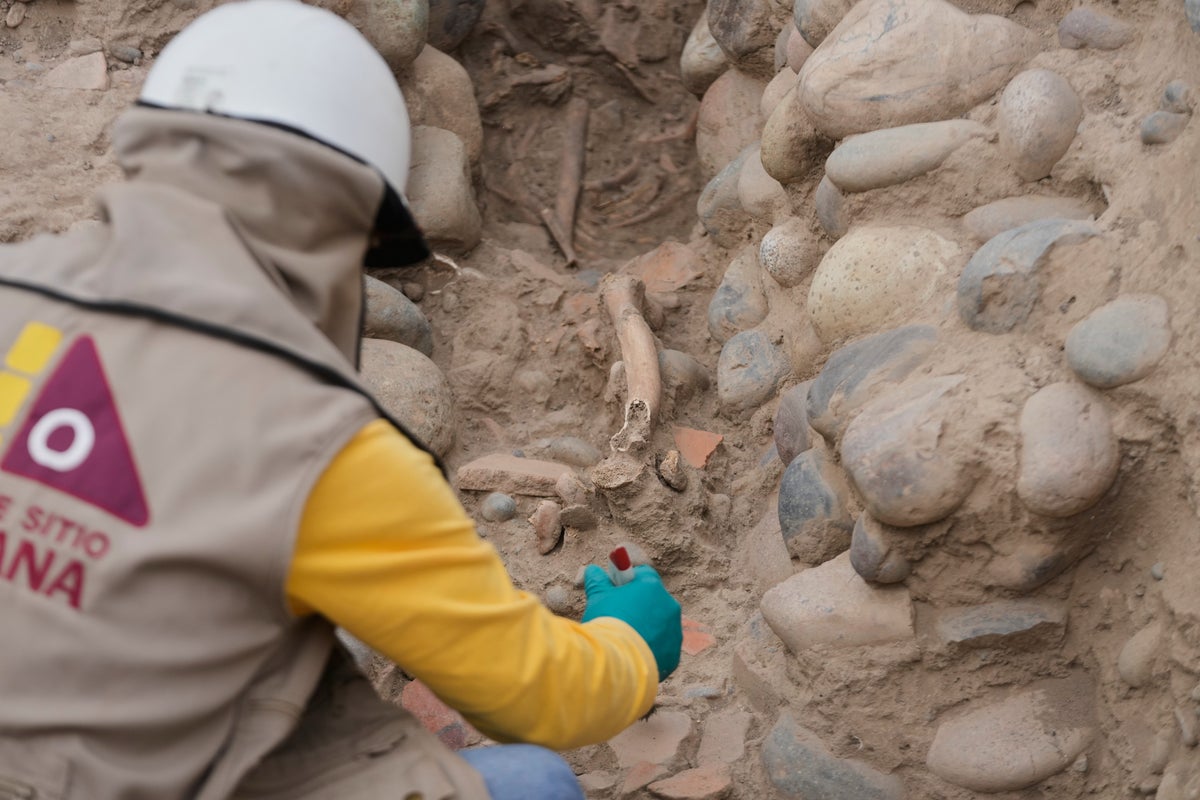
Archaeologists have unearthed the skeletal remains of an adult man near the base of an ancient adobe pyramid in Lima, Peru, in a discovery that could shed new light on human sacrifice rituals. The body, believed to have been buried as an offering, was found at Huaca Pucllana, a major administrative and religious centre of the Lima culture in the Miraflores and San Isidro districts of the Peruvian capital. Lead archaeologist Gladys Paz said the find will help experts gain insight into "the rituals of the Lima culture" and reconstruct ceremonies conducted centuries ago.
The man is thought to have been sacrificed during a ritual that coincided with the sealing of a canal joined to a ceremonial pool. Interred inside the canal, the body was placed on its left side with its skull aligned towards the pyramid and the Pacific Ocean. The Lima civilisation flourished along Peru's dry central coast from the 1st to the 7th century, predating the rise of the Inca Empire by around 700 years.
Huaca Pucllana dissolved hundreds of years before Spanish conquistadors established Lima in 1535. The monument now sits among parks, tree-lined streets and high-end residential buildings, and is open to visitors, featuring a restaurant offering local dishes such as ceviche, stir-fried beef and roasted alpaca meat. Government data indicates that metropolitan Lima contains more than 400 archaeological sites. Pieter Van Dalen, an archaeology professor at the National University of San Marcos who did not participate in the dig, said burials, mummies and related artefacts are regularly uncovered along the coast, including during construction works for gas pipelines.
In 2025, utility workers excavating trenches in Lima uncovered a pre-Inca mummy about 1,000 years old, barely half a metre (20 inches) below the surface. Van Dalen said mummies on the Peruvian coast were usually found naturally mummified in desert areas, with skin dehydrated by summer heat, while others underwent mummification procedures for cultural reasons and are typically found seated with hands covering their faces. It is believed the man was buried as an offering.
Source: Independent Science
Most read in this category
Loading article…