
World · Breaking
Europe Have Turned Many Riverbeds Into Dry, Sandy Stretches, With Major Waterways Like the Rhine, Danube and Po Falling to Historic
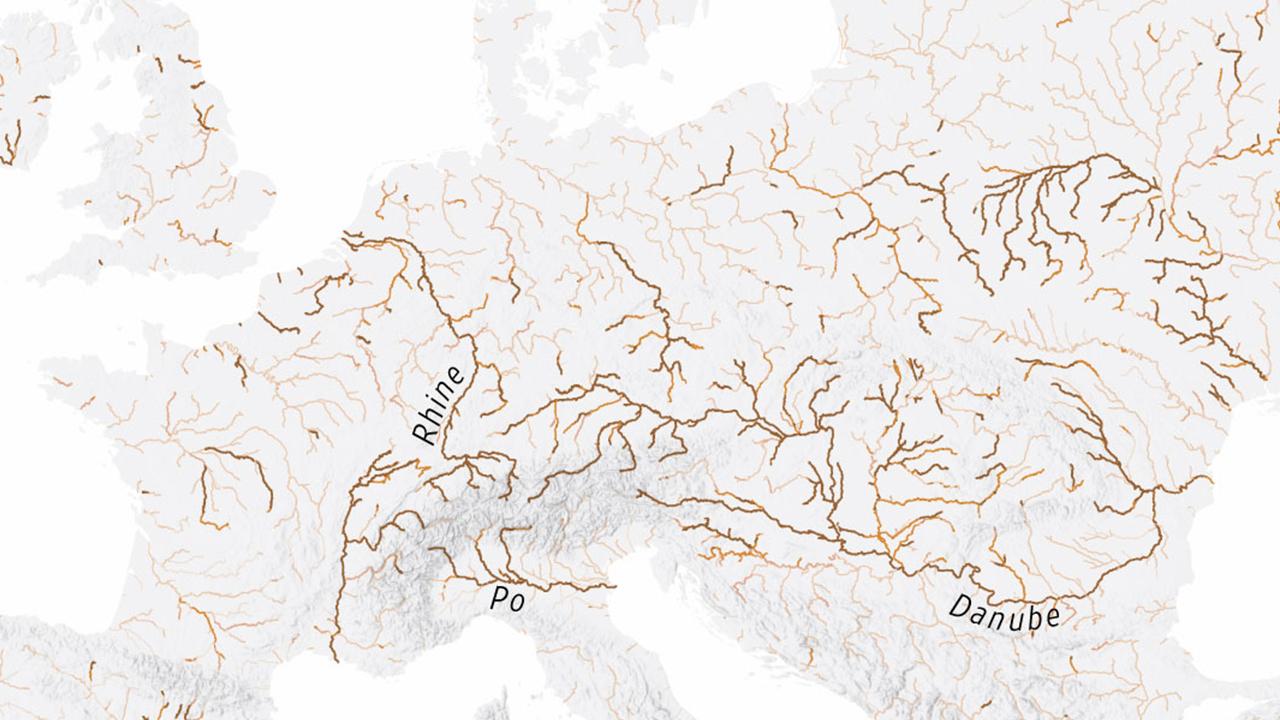
Satellite imagery analyzed by The Wall Street Journal shows how quickly water levels in European rivers have dropped compared with the same period last year. The Danube's extreme drop left Romania's only nuclear plant unable to meet its cooling-water needs. The Cernavoda Nuclear Power Plant, which supplies about 20% of Romania's energy, halted operations in mid-August.
Army efforts to use explosives to channel more water to the facility failed. Hungary's Paks Nuclear Power Plant, which provides about 40% of the country's electricity, also came close to suspending production due to water scarcity. On parts of the Rhine, low water levels have forced cargo ships to operate at only 20% of capacity, raising transport costs and disrupting supply chains.
In Germany's Kaub region, the river level fell to 24 centimeters, and in places below 8 centimeters, making freight runs economically unviable. The retreat of the Po, Italy's longest river, allowed saltwater from the Adriatic Sea to push up the riverbed, threatening farmland and crops. Despite above-average winter rainfall across much of southern and western Europe, heat waves since May rapidly dried out the soil.
Experts say rain will be absorbed by parched ground before reaching rivers, so the situation will not improve quickly. European Commission data indicates high temperatures and drought conditions are expected to persist through August and September.
Source: TRT Haber
Most read in this category
Loading article…