
Tech
🇺🇸 United StatesBoston Dynamics' Atlas Humanoid Robot Can Now Autonomously Replace Its Depleted Battery in Under Three Minutes
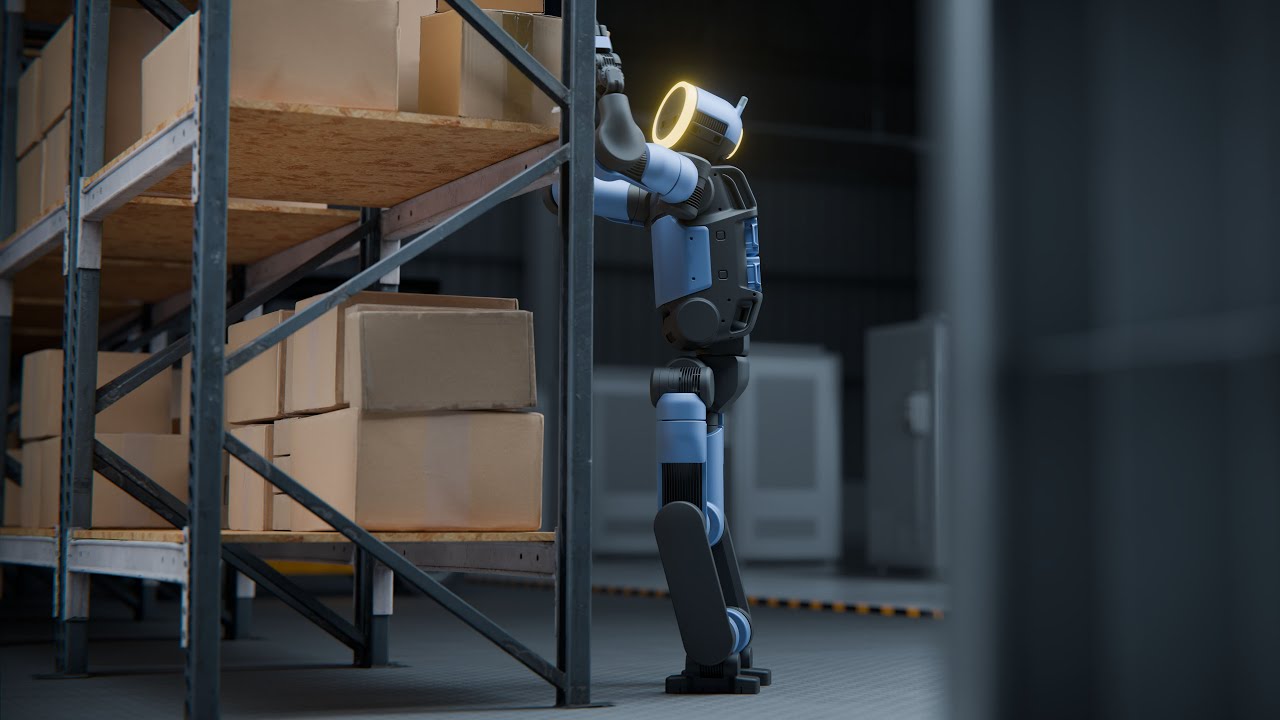
The production-ready robot is designed to navigate back to a designated battery station, swap its battery, and resume operations, according to the company’s specifications. The capability could help reduce downtime and support longer work shifts, addressing a key challenge for humanoid robots as manufacturers seek to deploy them more widely in industrial environments. Recently, the Hyundai-owned robotics firm revealed how Atlas learned heavy-object handling through reinforcement learning and large-scale simulations, enabling adaptive lifting, carrying, and balancing within weeks.
Atlas cuts downtime. Atlas humanoid robot is moving closer to practical industrial deployment, with autonomous battery swapping designed to keep the machine working for longer shifts with minimal human intervention. The production version of Atlas can independently recognize when its battery is depleted, return to a designated battery station, replace the battery in less than three minutes, and resume its assigned task.
Boston Dynamics says the system is intended to reduce downtime in industrial environments where robots may need to operate continuously. Atlas delivers about four hours of runtime during typical operation and around two hours when performing heavy lifting. A conventional recharge takes approximately 90 minutes, making the autonomous battery swap a potentially important advantage for factories running multiple shifts.
The new Atlas stands approximately 6 feet 2 inches tall and weighs about 198 pounds (90 kg). It can handle sustained loads of up to 66 pounds (30 kg) and briefly lift as much as 110 pounds (50 kg). The humanoid also features tactile sensing in its hands and a 360-degree camera system to perceive its surroundings.
Boston Dynamics has designed the latest Atlas specifically for industrial applications, including lifting, moving and material-handling tasks. The robot combines electric actuation, advanced sensing and AI-based control to adapt its movements to changing environments rather than relying solely on fixed, preprogrammed routines. With autonomous battery replacement, improved manipulation and expanded sensing capabilities, Atlas is being positioned as a humanoid designed for sustained real-world industrial work.
Atlas nears industry. Recent reports suggest that Atlas is moving closer to industrial deployment as advances in AI, simulation, and robotic hardware improve its ability to learn, adapt, and perform complex physical tasks. A key breakthrough is accelerated robot training.
Advanced simulation systems can run the equivalent of millions of hours of robot training in a single day, allowing new behaviors and skills to be developed rapidly. Those capabilities can then be transferred from simulation to a physical humanoid in roughly one hour, significantly reducing development time. The technology also addresses the "sim-to-real" gap, where skills learned virtually often fail to work reliably in real-world environments. A simplified hardware architecture helps create more accurate simulations and makes transferring learned behaviors to physical robots more efficient.
Source: Interesting Engineering
Most read in this category
Loading article…