
Health
Governor Gavin Newsom Announced the Increase Last Week, As Several Other States Prepare to Raise Their Minimum Wages Next Year
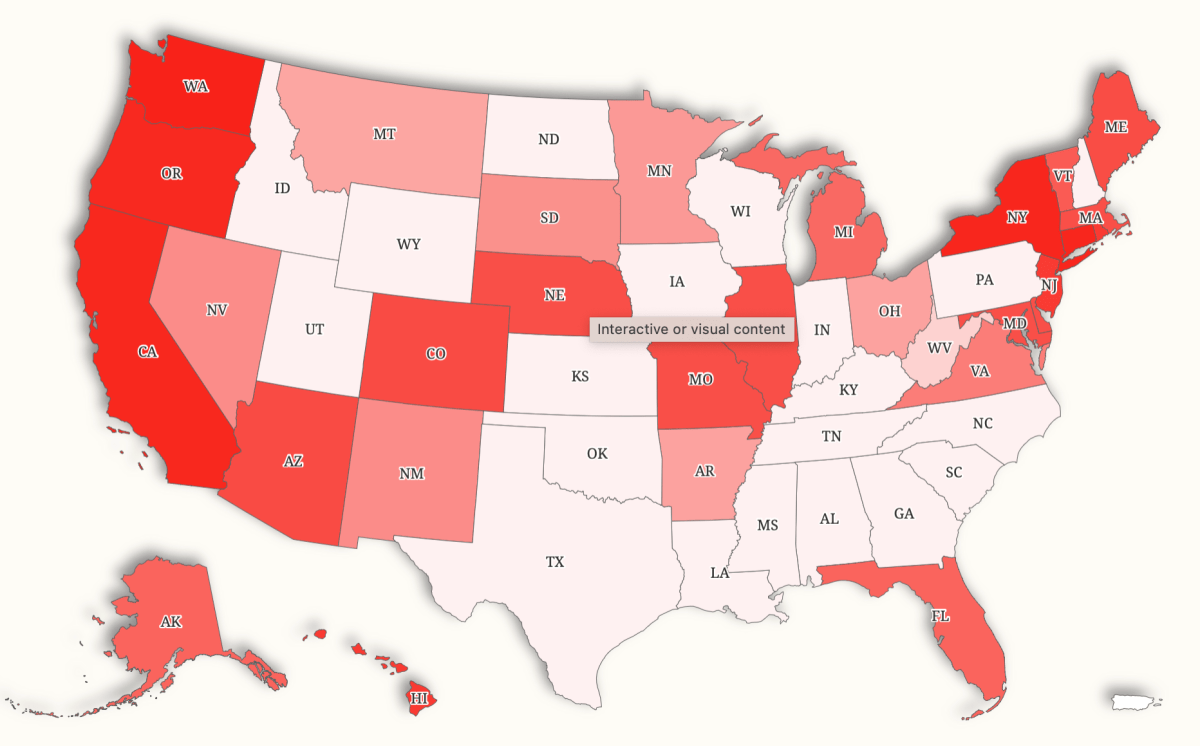
California will raise its minimum wage to $17.40 an hour from January 1, 2027, putting the state among those with the highest wage floors in the country. The changes come against the backdrop of a federal minimum wage that has remained unchanged at $7.25 an hour since 2009. On August 6, Newsom said in a post on X that the Golden State's minimum wage was double that of Texas, which currently follows the federal $7.25 floor. Minimum wage policy varies considerably across the United States.
While federal law sets a nationwide floor, states and local governments can require employers to pay higher rates. Thirty states and Washington D.C. have wage rates above the federal minimum. Supporters of increases have argued that the federal rate has failed to keep pace with the cost of living, particularly following the rise in inflation after the COVID-19 pandemic.
Critics of higher minimum wages have argued that a raise could negatively impact businesses and lower employment. While California has the higher minimum floor, Texas minimum-wage workers face a lighter direct state tax burden than their counterparts in California, largely because Texas does not levy an individual state income tax. California workers, by contrast, can owe state income tax and also contribute to the state's disability insurance program.
However, those tax differences are not large enough to offset the much wider gap in minimum wages: a full-time worker earning California's $16.90 hourly minimum would still take home substantially more—approximately $29,600—each year than someone earning Texas's $7.25 minimum—approximately $13,900—even after accounting for the additional taxes. The wage gap does not necessarily translate directly into greater purchasing power as California overall has higher housing and living costs. Newsom framed California's latest increase as part of a broader divide over wage policy, criticizing Republicans who he said have blocked efforts to raise the federal minimum wage while handing tax breaks to billionaires and big corporations.
California has chosen a different path—one that rewards work, grows the economy, and puts working families first. We believe if you work hard, you deserve a decent paycheck. They think $7.25 an hour is enough.
We don’t, he wrote. California’s minimum wage has risen steadily during Newsom’s time in office, although the initial increases were set in motion before he became governor. When he took office in 2019, the rate was $12 an hour for employers with 26 or more workers and $11 for smaller businesses.
Those increases were part of legislation signed by then-Governor Jerry Brown in 2016, which put California on a path to a $15 statewide minimum wage. Under that schedule, the rate for larger employers reached $15 in 2022, before increasing to $15.50 for all employers in 2023. Since reaching $15, California’s statewide rate has been adjusted annually for inflation under the same law, rising to $16 in 2024, $16.50 in 2025 and $16.90 in 2026. Under Newsom’s tenure, California has also adopted higher wage floors for some industries, including legislation establishing a $20 minimum wage for covered fast-food workers beginning in April 2024, while certain health care workers are subject to separate, higher minimum-wage requirements. The federal minimum wage last increased in 2009, rising from $6.55 to $7.25 an hour as the final stage of the Fair Minimum Wage Act of 2007, which was signed into law during George W. Workers are generally entitled to the higher rate when state or local minimum wage requirements exceed the federal level.
Source: Newsweek
Most read in this category
Loading article…