
Culture
But Rarely Does the Final Girl, the Trope of the Last Woman Standing to Confront the Killer, Get a Redemption Story
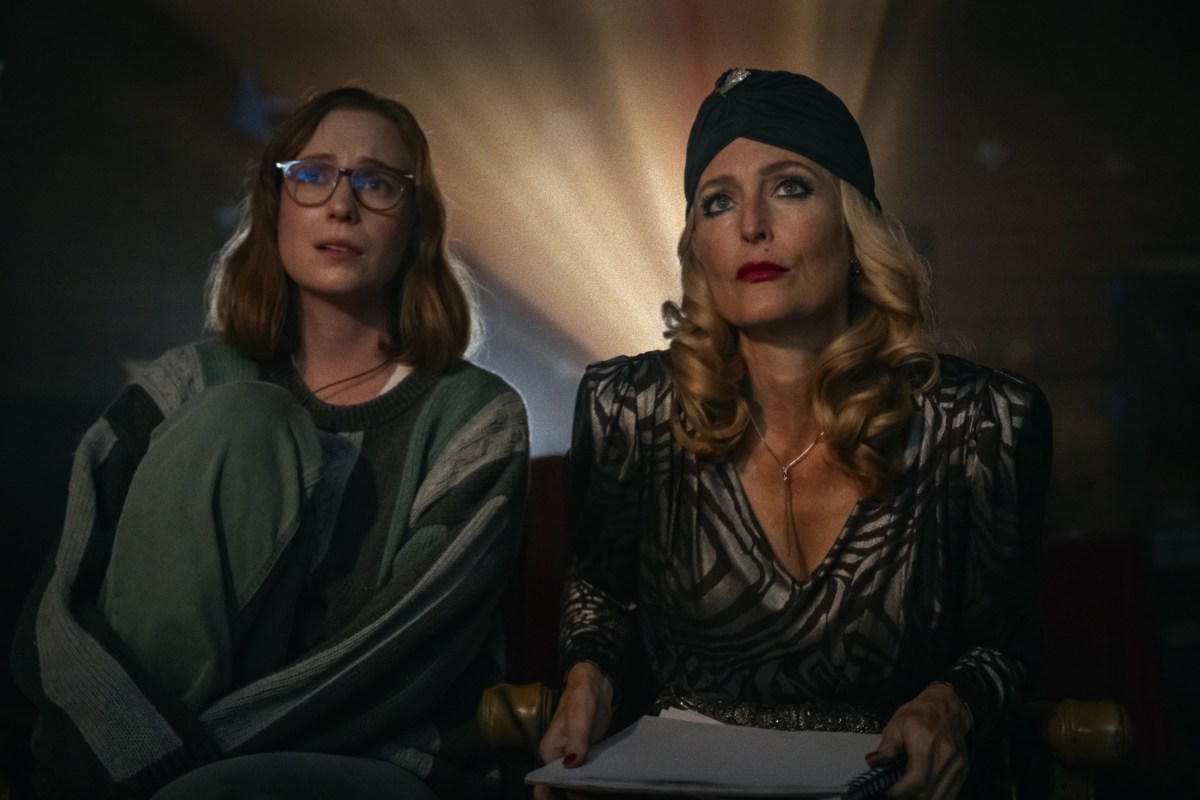
Gillian Anderson and Hannah Einbinder reclaim the slasher for women in a new era with Teenage Sex and Death at Camp Miasma. It's no surprise that horror films are often allegories for larger societal issues, like racism with Get Out (2017) or more recently male entitlement with Curry Barker's Obsession (2025).
That changes with Jane Schoenbrun's Teenage Sex and Death at Camp Miasma. "I think just the genre ambiguity, the fact that it is not totally categorizable in one way, Hannah Einbinder told Newsweek about what drew her to the project. "The conceit of the film and the way that it uses horror slasher tropes to ultimately be something that is empowering is just cool.
I hadn't seen anything like it. In the film, Einbinder plays Kris, a director hired to make a new installment in a popular slasher franchise and determined to cast the final girl from the original movie, Billy Wilder ( Gillian Anderson ), reclaiming the narrative of a male-driven series through Billy's character. As Kris tries to convince Billy to do the film, the actress attempts to woo the director, and the two undergo a psychosexual exploration in what will almost certainly be the most unique film you see this year.
Anderson said the impact was apparent the moment she walked onto the set. "It's one thing to read something on the page and to anticipate what the scene might be like to film, she said. "And then there's another thing, which is stepping onto a set that has been so perfectly production designed and created for the sole purpose of the viewing public, who you know every single square inch is going to be picked apart and discussed.
There's a meta aspect of it that I don't even think I anticipated, even though I had read the script. For Anderson, the film's ability to let all sorts of people feel seen is what thrills her about it, and she frames that as something bigger than a genre exercise. "I feel like it speaks to so many different subsections of humanity, that if they were all to take ownership of it and embrace it and then agree that it belongs to everybody, that somehow just the process of doing that would eradicate some of the judgment and hating that takes place between the different subcategories, she said.
"And so I see it as being very unifying and potentially leading to global compassion. It's not a small thing. Horror has long told stories that reflect real-world problems, but for decades those stories were told by one type of person: men.
In recent years, films like A Girl Walks Home Alone at Night (2014), The Babadook (2014) and The Substance (2024) have handed the genre to filmmakers working from perspectives it rarely made room for. Camp Miasma is a thrilling addition to that shift. It is deeply referential to a genre Schoenbrun clearly loves while building a queer, female-led story on top of a structure horror fans already know by heart.
That combination of reverence and reinvention is what Einbinder said made the material feel like more than an exercise. Knowing that this is a personal subject matter to Jane and that a lot of their films, all their films, are very personal, she said, I think stood out. Anderson's Billy is a not-so-subtle descendant of Sunset Boulevard 's Norma Desmond, which turns out to be a fitting reference for a film looking to reshape the final girl.
Desmond, like Billy, became an outcast in her industry for the offense of aging. Billy waited for a sequel worth making, and by the time one arrived, Hollywood had decided she was too old for it.
Source: Newsweek
Most read in this category
Loading article…