
World · Breaking
Organic Carbon, a Key Chemical Building Block of Life, Can Also Form Through Non-biological Processes
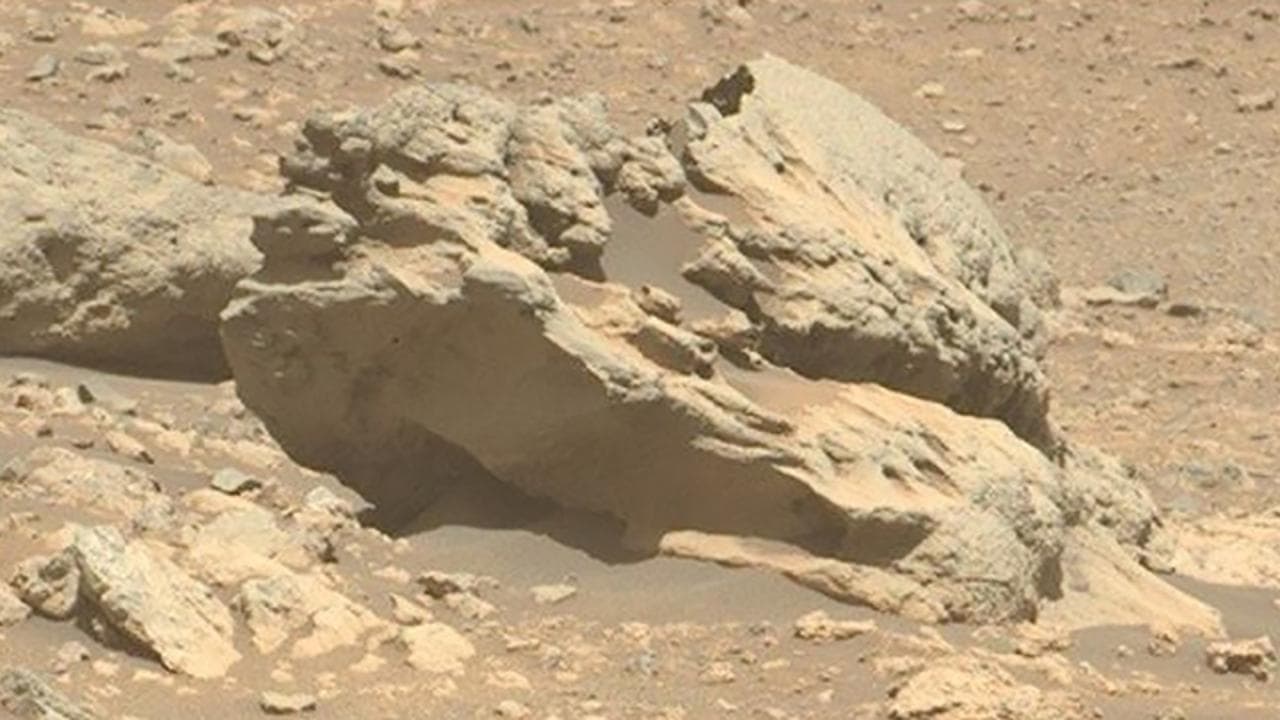
NASA's Perseverance rover has detected preserved organic carbon just beneath the Martian surface, raising new questions about ancient environments on the planet. The findings, published in Science Advances, confirm the presence of organic carbon in two rocks in the Bright Angel formation, offering scientists a clearer view of what was detected and what remains unresolved. Organic carbon, a key chemical building block of life, can also form through non-biological processes.
The study was co-led by Ashley Murphy, a postdoctoral researcher at the Planetary Science Institute, and Kyle Uckert, deputy principal investigator of the SHERLOC instrument. The team used SHERLOC on Perseverance's robotic arm to examine rocks in Jezero Crater's Bright Angel formation and collected a sample from a rock known as Cheyava Falls. The instrument employs Raman spectroscopy, using laser light to detect and map minerals and organic compounds without damaging the sample.
Analyses revealed the presence of macromolecular carbon, a form of organic carbon composed of complex networks of carbon atoms. While common on Earth and in meteorites, its presence is scientifically significant but not alone evidence of life, as it can form biologically or non-biologically. Billions of years ago, water and sediments flowed into Jezero Crater, with fine-grained material settling to the bottom and forming the mudstones Perseverance examined.
Macromolecular carbon was found alongside fine-grained sediments and carbonate and sulfate minerals formed during aqueous alteration, suggesting organic matter may have been deposited or preserved during two or more events in Mars' geological history. The researchers found the carbon preserved just a few microns below the surface, the shallowest detection reported on Mars to date. The Martian surface is known to be destructive to organic molecules due to radiation, sunlight, and reactive chemicals, so finding organic matter so close to the surface indicates the material is resistant to degradation or protected by surrounding minerals.
The discovery also expands the organic map of Mars, as Perseverance detected this material more than 3,200 kilometers from previous organic detections made by the Curiosity rover in Gale Crater, suggesting organic matter may have been more widespread in ancient Martian lakes and rivers. While significant, the findings do not definitively answer whether Mars once hosted life. The rover lacks the large laboratory equipment needed to determine if Bright Angel contains fossilized microbial life, and more sensitive instruments on Earth are required for definitive results. If samples are returned to Earth, scientists could determine whether the organic carbon originated from biology or geology.
Source: TRT Haber