
Science
🇨🇭 Switzerland🇺🇸 United States🇧🇪 BelgiumNobel Prizes, the Annual Award Honoring Quirky and Thought-provoking Scientific Research, Were Announced This Week, With Winners Spanning 10
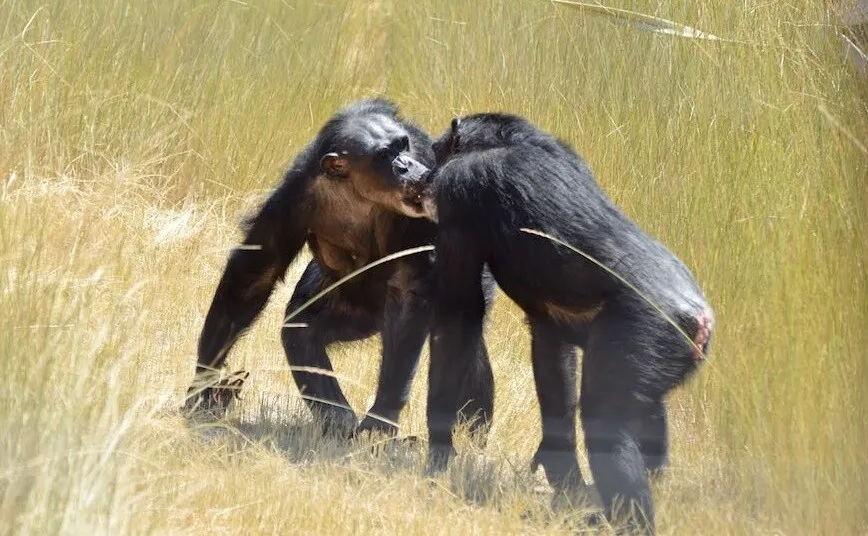
The awards ceremony took place on October 3 in Zurich, Switzerland, marking the first time in the prize's 36-year history that the event was held outside the United States. Organizer Marc Abrahams moved the ceremony, citing concerns over the U.S. government's stricter visa and immigration policies, saying it was "not safe" for journalists and winners to visit the U.S. Last year, nearly half of the 10 winning teams could not attend due to U.S. visa restrictions. Next year's ceremony is set for Antwerp, Belgium, with a return to Zurich planned for 2028. A standout winner was the biomechanics prize, awarded to a University of Oxford team for tracing the evolutionary origins of kissing.
The researchers defined a kiss as a non-aggressive interaction involving direct oral contact between members of the same species, accompanied by movement of the lips or surrounding areas, without food exchange. Under this definition, not only primates but also polar bears, some birds, and even ants qualify as kissing animals. The study suggests human kissing dates back roughly 21.5 million years to the ancestors of great apes.
It also notes that while modern humans and Neanderthals diverged 450,000 to 750,000 years ago, their oral microbes only split into distinct strains 110,000 to 140,000 years ago, implying the two species likely shared kisses. Lead researcher Professor Matilda Brindle (evolutionary biology) said the work reveals that animals also kiss and hopes the award encourages people to reconsider humanity's place in the animal kingdom. The soil science prize went to a University of Zurich team that buried 1,000 cotton underpants and tea bags in the ground across more than 25 countries with citizen scientists, digging them up two months later to assess soil health.
Underpants decomposed fastest in home gardens, which also had the highest organic matter; lawns had the least microbial activity, with farmland and grassland in between. The researchers concluded that land use, rather than soil properties, determines biological activity.
Source: Hankyoreh EN
- Nobel Prize
- science awards
- University Oxford
- Zurich
- Marc Abrahams
Most read in this category
Loading article…