World
Because Entering Ceuta or Melilla Means Entering the EU, They Are Among the Few Land Routes Into the Bloc, Drawing Migrants During Surges
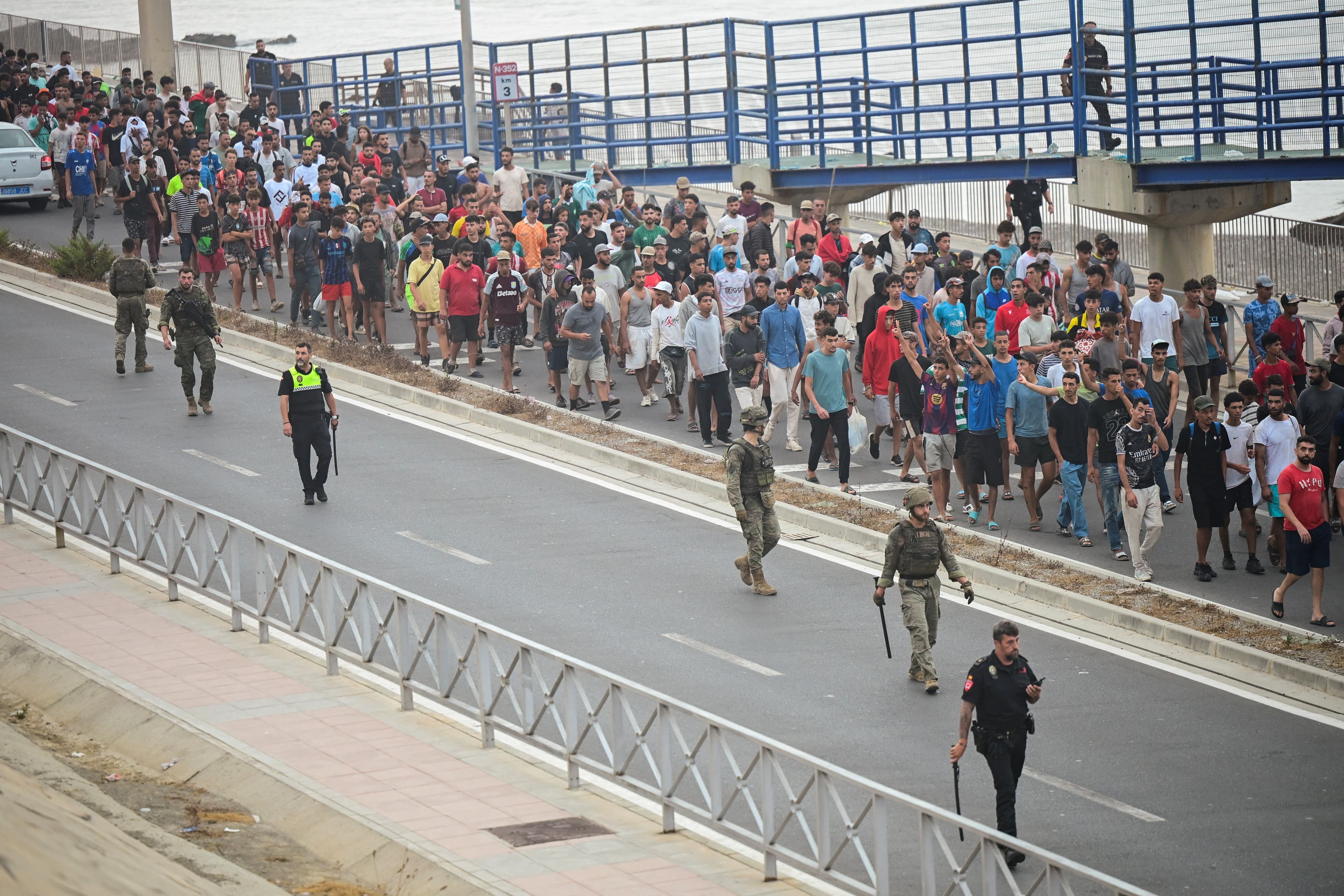
Two Spanish enclaves in North Africa remain at the center of a diplomatic standoff between Spain and Morocco after thousands of migrants entered Ceuta from Morocco on July 31, spotlighting one of Europe's most unusual borders. Ceuta, though on Africa's northern coast and surrounded by Moroccan territory, is administered by Spain and part of the EU, forming with nearby Melilla the bloc's only land border with Africa—a recurring flashpoint for migration and tensions between Madrid and Rabat. The latest crossing highlights three connected issues: migration pressures, the cities' legal status, and Morocco's long-standing sovereignty claim.
Because entering Ceuta or Melilla means entering the EU, they are among the few land routes into the bloc, drawing migrants during surges. The timing links to a recent Spanish Supreme Court ruling that the "hot return" procedure, allowing immediate returns at physical border barriers like fences, cannot apply to migrants intercepted at sea while swimming toward the enclaves. The ruling didn't grant automatic residency or legalize irregular entry, but migrants interpreted it as making immediate return harder if they reached Spanish territory by sea, with officials and experts citing it, plus broader pressures and misinformation, as factors in the surge.
Migration cooperation is tied to the wider Spain-Morocco relationship, as Madrid relies on Rabat to manage routes, and Morocco's control role shapes its ties with Spain and the EU. In 2021, thousands entered Ceuta amid tensions after Spain allowed Polisario Front leader Brahim Ghali medical treatment; the group seeks Western Sahara independence, which Morocco claims, and Rabat saw the move as a setback while Madrid cited humanitarian grounds. Spain accused Morocco of easing border controls, which Moroccan officials rejected, showing how migration cooperation entangles with political disputes.
Under international law, Ceuta and Melilla are Spanish territories with full Spanish authority, represented in Spain's system and part of the EU, not listed by the UN as Non-Self-Governing Territories, so no UN decolonization process applies. No international court ruling or UN decision has determined sovereignty, leaving the dispute a political disagreement rather than an adjudicated legal process—a key difference from Western Sahara.
Source: Al Jazeera English