
Tech
Playing Mass Effect Spiritual Successor Exodus Was the Best Kind of Surprise
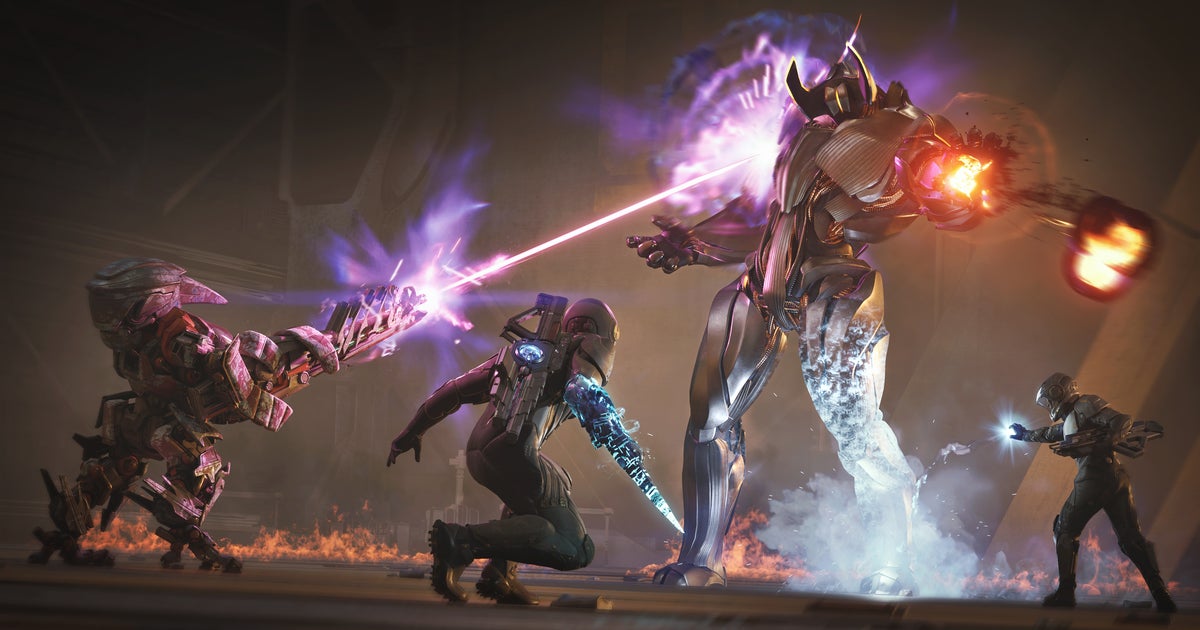
My relationship with Mass Effect begins and ends with the first game (let's just blame the M35 Mako and leave it at that), and so Exodus - which is making no bones about being something of a Mass Effect spiritual successor, borne of some of the same creative team - isn't a game that's been anywhere close to my radar.
My relationship with Mass Effect begins and ends with the first game (let's just blame the M35 Mako and leave it at that), and so Exodus - which is making no bones about being something of a Mass Effect spiritual successor, born from some of the same creative team - isn't a game that's been anywhere close to my radar. But the Gamescom gods contrived to put Exodus on my appointment schedule, and while the 45 minutes or so I played wasn't what I was expecting when I first sat down, I've come away both intrigued and impressed by what developer Archetype Entertainment is trying to achieve. Exodus, for a quick story refresher, takes place around 40,000 years from now, focusing on protagonist Jun Aslan - a sort of evolutionary bridge between humans and an advanced, genetically engineered form of humans known as Celestials - who, as the narrative unfolds, becomes embroiled in a quest to save his (or her, if you opt for the female variant) home planet, Lidon, from a Celestial techno virus.
As our Gamescom demo begins, however, there are other concerns. As the slick opening cinematic briskly conveys, our intrepid party is attempting to infiltrate the defence platform Khonsu, orbiting Lidon, somewhere in the year 42530. At this juncture, our crew consist of Jun, pilot and mechanic Kara Voss, Parliament of Ravens operative Suliman Tenjin, heavy hitting weapons expert Elise Charroux, and Awakened Octopus mercenary Salt (in Exodus' lore, the Awakened are essentially upgraded, highly advanced animals now trying to find their own place in the world after having been looked down on by humans for so long - which is how Jun's adopted brother, Houston, another companion, is a wolf). And as the sequence unfolds, there's a moment of tension as our team attempts to slip through security using an illicitly acquired access code, but ultimately - success!
- we slip through and the mission begins. And what sights! Once Exodus' switches to playable third-person mode, its action really does look striking: as we strap on mag boots and navigate the treacly micro-gravity environment of the station's airlock exterior, we're treated to some lovely deep space vistas; Lidon looms out among the stars, while vast ships spew green lasers amid swirling asteroids.
Space debris - rock chips and other detritus - clusters in small groups along our path ahead, scattering outward as we stride on through. As game director Chris King explains, the set-up and the sequence - which sees our group on a mission to liberate the frog-like Kay (another Awakened species) imprisoned within Khonsu - is very much inspired by Star Wars' iconic Death Star infiltration, but the goal is to "surprise players and put our own twists on it". And that starts with a station aesthetic that eschews shiny metal in favour of mineral: first an exterior of cavernous sweeping curves, then within, spaces structured from livestone - a key substance in Exodus' lore - resembling the kind of hexagonal structural jointing you'd find in Northern Ireland's Giant's Causeway.
And as luck would have it, one of Jun's party tricks is his ability to manipulate livestone. Jun can also use his "precognition" ability to highlight potential areas of intrigue around the environment - a weak wall, say, or a hidden room, which may house useful resources or weapons mods - lending progression a light exploratory side focus. There are moments, too, when the action takes a pause for dialogue-driven story beats.
Source: Eurogamer
- Exodus
- Playing Mass
Most read in this category
Loading article…