Science
The Findings, Published in Nature Geoscience, Offer a More Reassuring Picture Than Previously Feared
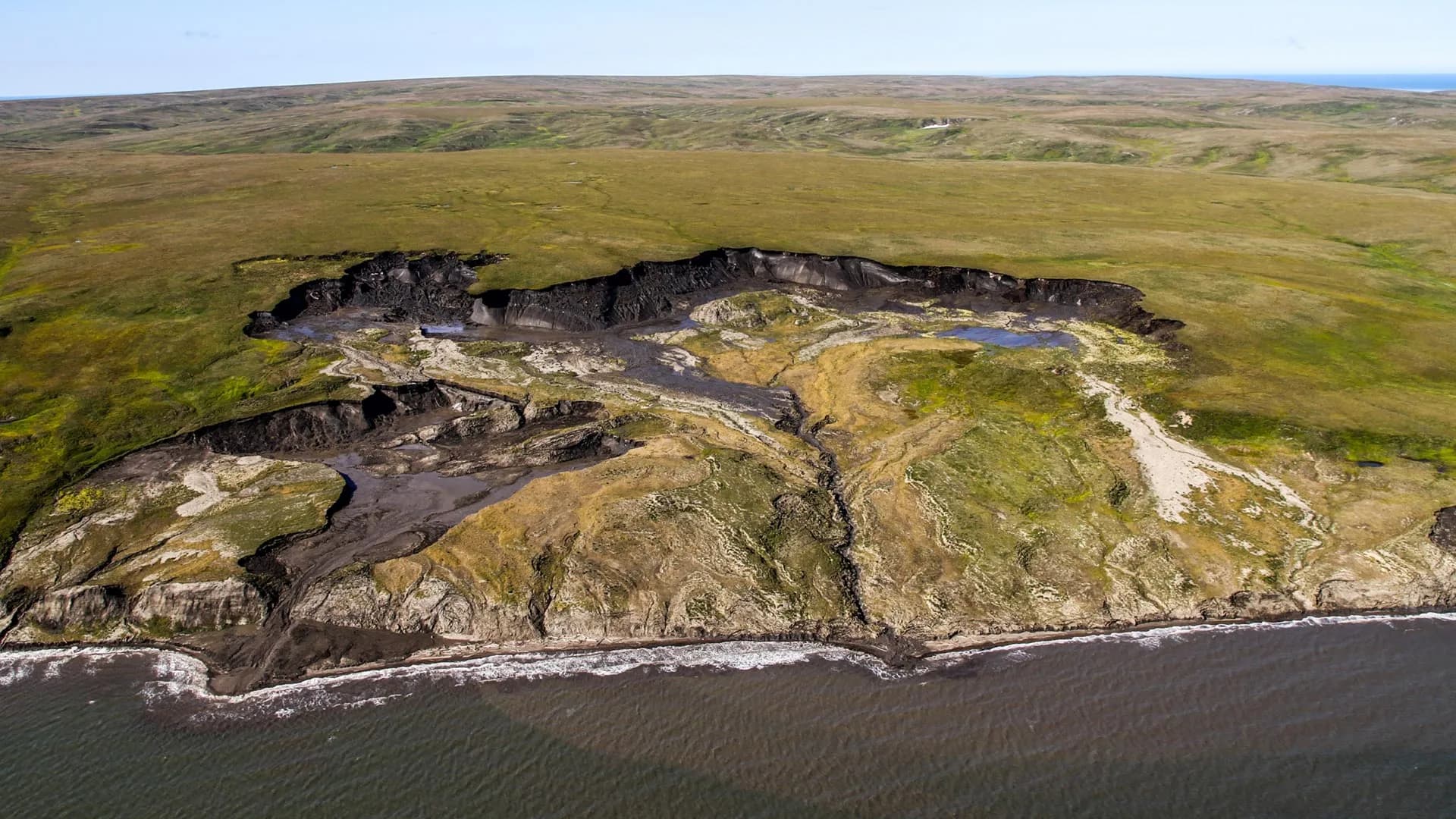
Thawing Arctic permafrost is releasing ancient carbon into the ocean, but new research shows that most of it gets buried in the seafloor rather than becoming greenhouse gases. Sediment cores collected near Canada's Herschel Island reveal that only about 10 percent of the land-based carbon is converted into gases by microbes, while the rest remains trapped in seabed sediments. The findings, published in Nature Geoscience, offer a more reassuring picture than previously feared.
Arctic permafrost holds vast carbon stores—about 1,300 gigatonnes of organic carbon on land, with another 400 gigatonnes in ocean sediments and river deltas. As the region warms faster than anywhere else, thawing ground and eroding coastlines carry this carbon into the Arctic Ocean. According to Dr. Manuel Ruben, lead author from the Alfred Wegener Institute, up to 0.02 gigatonnes enter the sea each year, and this outflow could rise by 70 to 150 percent by 2100. Until now, scientists had limited data on how much of this carbon returns to the atmosphere versus being stored in the seabed.
To address this, researchers from the Alfred Wegener Institute and MARUM at the University of Bremen collected sediment cores from several locations off Herschel Island, spanning about 50 years of deposition. They found that only a small share of the carbon entering the ocean becomes part of the active carbon cycle. "Microorganisms convert around ten percent of the organic carbon from the sediments into gases, Ruben said.
The rest stays buried. The team analyzed sediment composition, accumulation rates, and pore water chemistry. Carbon isotopes served as tracers to identify the microbes' food sources.
"The 13C isotope tells us whether they consumed carbon from land or sea, said Prof. Gesine Mollenhauer, a geochemist at AWI. "The 14C isotope revealed whether they preferred old permafrost carbon or fresh algal remains. The results indicate that sediment-dwelling bacteria are selective eaters, favoring fresh marine carbon over older permafrost material.
This suggests that thawing permafrost may contribute less to atmospheric greenhouse gases than once thought. However, the researchers caution that more work is needed. "Some of the organic carbon from the permafrost may already have been broken down before it reaches the seabed, Mollenhauer noted.
Source: ScienceDaily