World
Legion Is Detaining and Concentrating Groups of Migrants in Ceuta Before Deporting Them to Morocco, With Soldiers Admitting the Destination
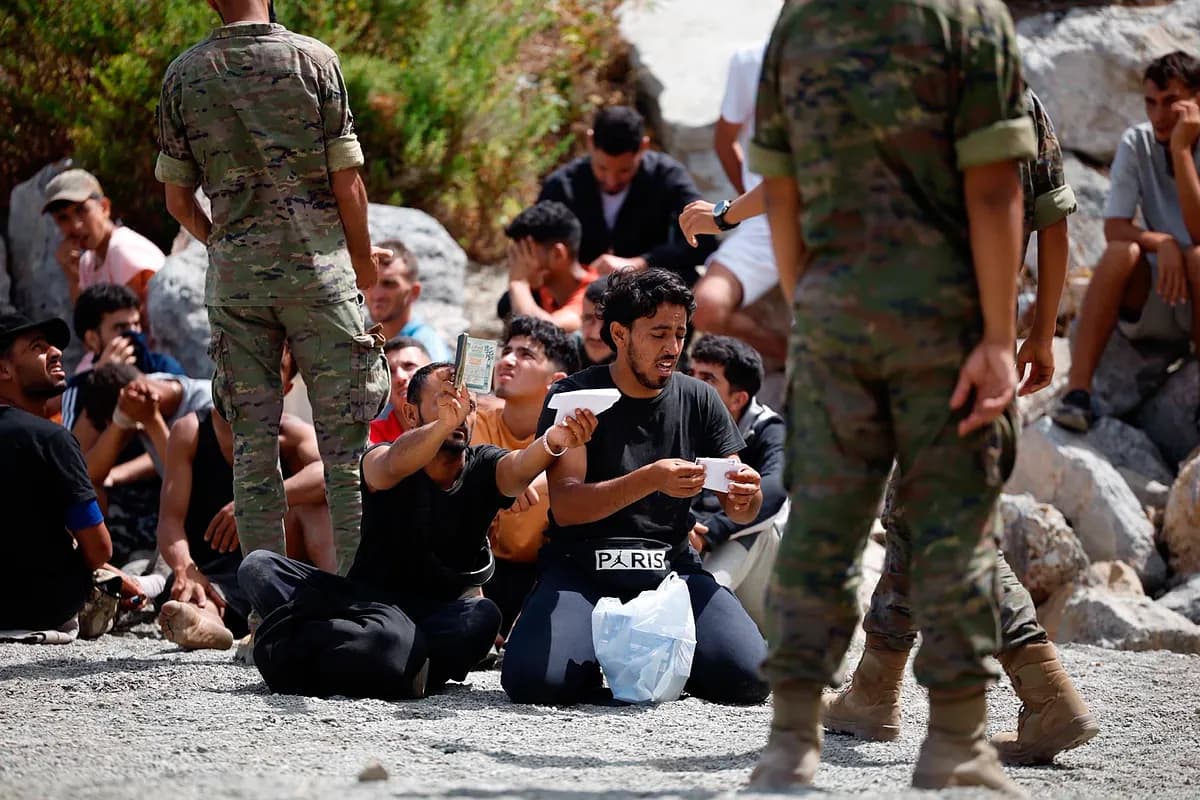
A military truck had just arrived at the beach when one migrant broke through the cordon and sprinted toward stairs, with legionnaires in pursuit while other soldiers urged journalists to block his path. The man escaped up the stairs. The scene unfolded near the jetty adjoining San Pablo warehouses, one of the concentration points set up in Ceuta to gather migrants located by the army before driving them to the Moroccan border.
There, North Africans, sub-Saharan Africans, and citizens of other countries sat against the wall, surrounded by legionnaires and under the supervision of two National Police officers. Police observed the operation, but soldiers chased those trying to flee, intercepted migrants, and escorted them by the arm to the concentration area. Soldiers acknowledged off the record the groups' fate: "I could lie to you, but we take them to the border, admitted the lieutenant in command.
The military, visibly annoyed by journalists' presence, claimed those gathered on the beach had agreed to return "voluntarily. Yet the concept of voluntariness seemed tenuous: some begged not to be forced to leave, others cried, and several tried to escape as legionnaires approached. Images of migrants dodging soldiers repeated.
Those who fled up the stairs had soldiers chasing them; some got away, others returned held by the arm and led back to the group by the jetty. One sub-Saharan man was approached by several legionnaires trying to lure him to the concentration point with a ruse; he noticed, feinted, and dodged them with a quick change of direction. Another migrant from Yemen knelt on the ground and began to pray.
A soldier in a Marine Infantry t-shirt tried to lift him and take him away, shouting, "Come on, damn it. Come on, damn it. A few meters away, another man was led with his hands behind his back.
The group's leader could not leave either. Among those concentrated were North Africans, sub-Saharan Africans, and two men with Yemeni passports who pleaded for mercy and begged not to be sent to the border. Migrants arrived at the beach from different points in Ceuta accompanied by small groups of legionnaires.
Most soldiers carried no weapons, though some commanders and non-commissioned officers did. A pair of national police officers remained in the area supervising, but soldiers executed the chases and kept groups surrounded. The operation extended beyond the beach.
The army had set up surveillance points across the city to locate migrants walking the streets and direct them to the concentration site near San Pablo warehouses. One such post was next to the tourist office, beside the Captaincy General. A female soldier stood alone by a military vehicle with a walkie-talkie.
Across a small bridge, two young men appeared without socks, dressed only in summer clothes. She watched them, alerted via radio, and approached, arguing in Arabic while another man joined the conversation. The two young men eventually turned around and walked away briskly.
Soldiers were unhappy with the cameras. "It's very hard for us to do this and you're making it more complicated, a non-commissioned officer reproached. Legionnaires also prevented journalists from speaking with those gathered on the beach.
Every attempt to approach the group drew fresh warnings to stop filming or keep distance, while the army continued defending the returns as "voluntary. "Even those from here, many born there, are helping" with this, said one participant in the operation, as new groups arrived escorted by soldiers."
Source: El Mundo