Tech
He Contends That Humanoid Robots Could Make War More Precise, Reduce Civilian Deaths, and Save Soldiers’ Lives

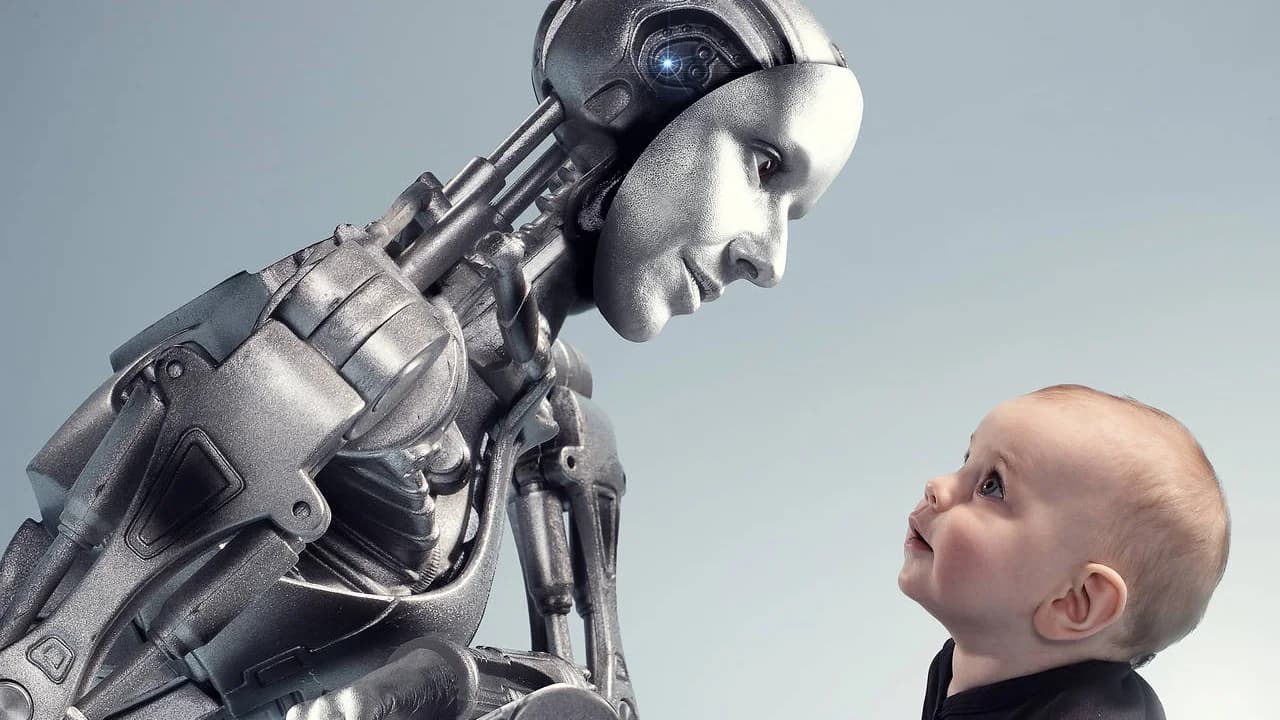
The co-founder of Foundation Future Industries says he would build armed robots “tomorrow” if the U.S. a stance that has human rights experts deeply alarmed. The San Francisco-based start-up, founded in 2024 and reportedly valued at more than $1 billion, is racing to create humanoid robots for factory work, futuristic mega-cities, and, most strikingly, the wars of tomorrow. Its ambitions have drawn fierce opposition: the Catholic Church and the United Nations have both condemned autonomous weapons, and U.N. Secretary-General António Guterres has called for an international ban on “killer robots.
Decades of pop culture, from Star Wars to Terminator, have warned of machines with the will to kill. But co-founder Sankaet Pathak told The Independent that such handwringing is misguided, arguing that AI and robotics are driving a new industrial revolution that could deliver mass abundance. He contends that humanoid robots could make war more precise, reduce civilian deaths, and save soldiers’ lives.
With adversaries like China and Russia pursuing military humanoids and weaponized four-legged robot “dogs, Pathak says America needs the ability to match them. “I really don’t understand how that doesn’t make sense to people, he said. Defense work is only a “small portion” of what Foundation does, he added, but he still cannot understand the opposition.
“It is so backwards that people in the Western world somehow have this disease of thinking that humanoid robots holding a gun is like as bad as a nuclear weapon, he said. Foundation believes it is the only U.S. or European company explicitly building humanoid robots for defense. Many top robotics firms have gone the other way, signing a 2022 open letter pledging not to “weaponize” their creations.
AI giant Anthropic was recently blacklisted by the Pentagon after seeking assurances its systems would not be part of autonomous weapons that use lethal force without human input; the Pentagon said it only wanted the AI for “lawful purposes. Foundation’s vision has found a receptive audience in the Trump era. The company declined to confirm the value of its U.S. military contracts but reportedly holds an estimated $24 million in defense deals to test its models across most military branches.
It also counts Eric Trump, the president’s son, as an investor and adviser; Foundation declined to disclose the size of his investment and said he is not paid. “Eric maintains a strict separation of church and state with the government, a spokesperson for Eric Trump told The Independent. “He believes robotics is the future and is proud to support great American technologies, including Foundation, which has an incredibly promising future.
Eric has no role in management and absolutely no decision making with the day-to-day operations. Foundation and the White House both strongly denied that Eric Trump’s involvement has given the company any unfair advantages. The start-up says it is in talks with the Department of Homeland Security about deploying its robots to patrol the U.S.-Mexico border; The Independent has contacted DHS for comment.
Earlier this year, reports emerged that Foundation was seeking as much as $500 million in new fundraising at a valuation around $3 billion. The company’s core offering is Phantom, a sleek, all-black, roughly six-foot-tall humanoid robot that can carry nearly 90 pounds. It perceives the world through AI and a camera array on its head, gathering data from a full 360-degree field of vision, and can operate via embedded AI or be piloted remotely.
A more powerful second-generation Phantom is under development and will be unveiled later this year. The company declined to name its commercial clients, but Phantoms are reportedly being tested in industrial and logistics settings from Atlanta to Singapore, and aided in the production of more than 24,000 cars last year, according. These industrial applications may be a promising business line, but it is the military plans that have drawn the most attention.
Humanoid robots, in Foundation’s view, would be more precise than many present-day military technologies, achieving the same aims as guided bomb strikes or human scouting missions with less risk to soldiers and civilians. “Today, no one has asked us to weaponize them, Pathak said of his company’s military ties.””””””””
Source: Independent World