Science
Skywatchers Hoping to Catch the 2026 Total Solar Eclipse Will Need to Book a Flight to Spain
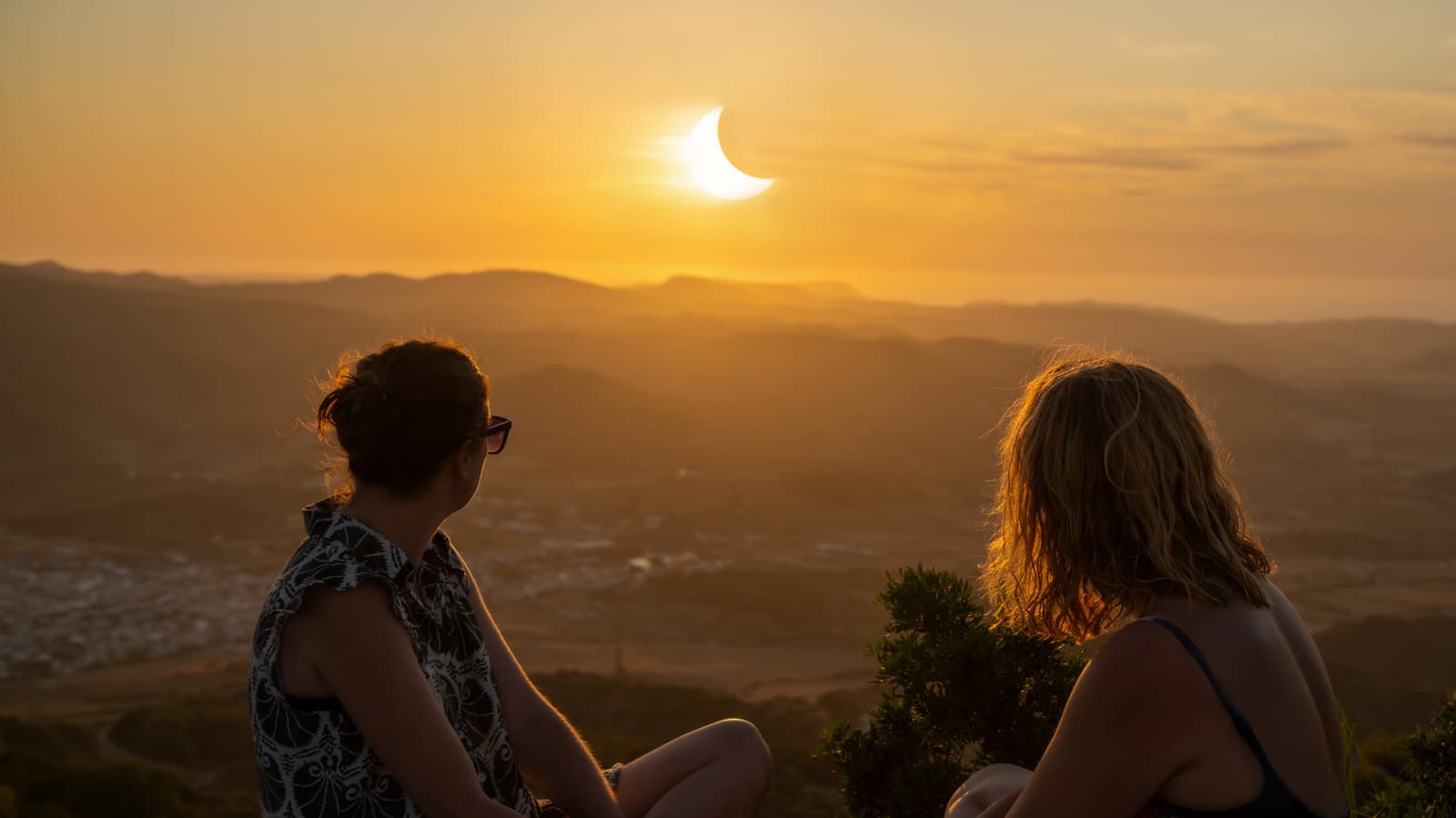
Skywatchers hoping to catch the 2026 total solar eclipse will need to book a flight to Spain or Iceland. The eclipse, set for August 12, is the first total solar eclipse since 2024 and lands on the same day as the annual Perseid meteor shower. It will also last longer than usual because it coincides with lunar perigee, when the moon is at its closest point to Earth and appears larger in the sky.
While the 2024 eclipse centered on North America, this year's path of totality — where the moon fully blocks the sun — sweeps across western Iceland and northern Spain. The longest totality will occur at Látrabjargi, Iceland, and the full eclipse will also be visible from Reykjavík, Isafjordur and other cities along the western coast. Spain, however, may offer the better experience: the path crosses far more land there, boosting the odds of clear skies, and temperatures in August typically run 20 to 30 degrees warmer than in Iceland.
Bilbao, Burgos, Palma, Santander, Valencia, Valladolid and Zaragoza are all in the full-eclipse zone, as is a small slice of northeastern Portugal around Montesinho Natural Park in Bragança. Remote parts of Russia and Greenland will also see totality, but those spots are hard to reach without a specialized expedition. North Americans won't get a total eclipse this time.
A partial eclipse will be visible across northern parts of the United States and eastern Canada, with coverage varying widely: New York City will see just 9 percent of the sun blocked, while St. John's in Newfoundland will see 53 percent. Since no U.S. location falls in the path of totality, anyone watching from the country must wear proper eye protection for the entire event. Looking directly at a partial eclipse without certified gear can cause severe, irreversible eye damage.
Sunglasses and binoculars are not sufficient. Viewers should use approved eclipse glasses or solar viewers — the American Astronomical Society maintains a list of vetted products — and photographers need a special filter over their lenses. Alternatively, an indirect viewer works well: a simple pinhole projector, with instructions available on NASA's website, or even a colander or crisscrossed fingers. Stand with your back to the sun, let light pass through the holes onto a wall or the ground, and you'll see the eclipse's outline projected safely.
Source: Engadget