Economy
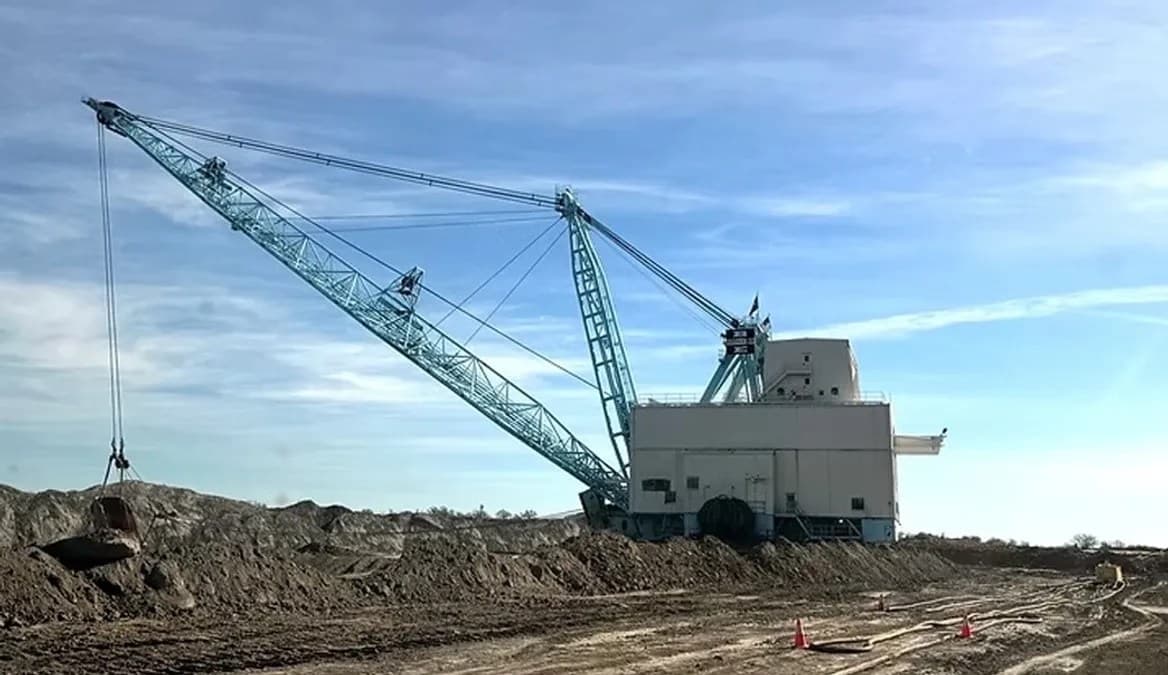
The Calvert Mine Is a 19-Million-ton Surface Lignite Mine Adjacent to the Twin Oaks Coal Plant
Construction is underway on a $1.7 billion solar and battery storage project in Texas that will transform active coal mining land into a clean energy hub. Panamint Capital announced last week that it broke ground on the 1.2-gigawatt Big Rooter Power solar farm in Bremond, roughly halfway between Dallas and Houston. The project will repurpose land and assets from the adjacent Twin Oaks coal-fired power plant and Calvert surface coal mine, both of which will continue operating.
Panamint says the project will be among the largest in the nation and the biggest solar array ever built at a brownfield site in North America. "We believe deploying new capacity at existing energy sites is the clearest way to benefit communities, ratepayers, and the environment alike, said Apolka Totth, CEO of Panamint, a Nevada-based investment firm. The installation will further boost Texas' thriving solar sector, which this year is expected to generate more electricity than coal in the Lone Star State.
The renewable resource is helping meet demand from data centers, manufacturing facilities, and rising air-conditioning use amid more frequent and extreme heat. The Calvert mine is a 19-million-ton surface lignite mine adjacent to the Twin Oaks coal plant. Panamint, backed by private equity firm KKR, launched in 2019 with the goal of extending the life of existing fossil-fuel infrastructure while building lower-emission facilities on the same sites.
In 2023, Panamint acquired the 310-MW Twin Oaks coal plant and Calvert mine "with the express intention of leveraging the site's existing characteristics to massively and rapidly expand generating capability at the lowest possible cost, Totth said by email. Work has started on the first phase of the solar farm, a 491-MW section set to go online in August 2028. Construction will begin in December on the remaining 658 MW, which could start producing power in August 2029. The 10,000-acre Big Rooter site will also include 1.6 gigawatt-hours of battery storage and 20 miles of new extra-high-voltage transmission lines. The firm says it also has the infrastructure and natural gas access needed to build at least 800 MW of gas-fired generation, either for the grid or customers like data center developers.
"Big Rooter is a landmark project that reflects the scale of investment being made in America's energy future, George Hershman, CEO of Solv Energy, said in a news release. The contractor is building the site's solar array, substation, and transmission infrastructure. Big Rooter's pairing with active coal operations makes it unique within the nation's small but growing coal-to-solar subsector, which has mainly focused on putting panels on former mine lands and retired industrial sites.
The largest of these projects is the 186-MW Tilden Solar Project in southern Illinois, followed by the 111-MW Martin County Solar Project in eastern Kentucky, which both went online last year atop abandoned coal mines. In Louisiana, the 240-MW Dolet Hills Solar Project is now being built on a former coal mine property. Developer BrightNight is advancing the Starfire installation on remediated mine land in Kentucky.
In 2023, when BrightNight announced the Appalachian project, electric truck startup Rivian signed on as the anchor customer with a 100-MW power purchase agreement. Starfire was initially envisioned as an roughly 800-MW project but is now on track for 410 MW, with construction slated for late 2027 and planned operations in 2030. The 111-MW Martin County Solar Project will supply power for Toyota's automaking operations in the state. "Earlier descriptions of a larger project reflected a broader long-term vision for the site, but as development has progressed, BrightNight has focused on the configuration that best aligns with current interconnection, permitting, site, and customer considerations, a BrightNight spokesperson said by email.
"We remain very enthusiastic about Starfire and its importance as a major redevelopment project on former coal mining land in Eastern Kentucky. Repurposing old mining sites for solar power has obvious appeal. As opposition breaks out in rural areas over using prime farmland for solar — concerns stoked by Trump administration officials, including U.S. brownfield projects allow developers to sidestep those conversations and put sullied land to use.
Doing so has typically proved more complicated and expensive than placing panels on flat or uncontaminated fields. The 2021 bipartisan infrastructure law and 2022's Inflation Reduction Act provided incentives to make it easier to finance clean energy installations on mine lands, while a $500 million Department of Energy program allocated funding for projects on current or former mines."
Source: Grist