রাজনীতি
Spanish Law Mandates Protection for Unaccompanied Minors, But Many Lack Food
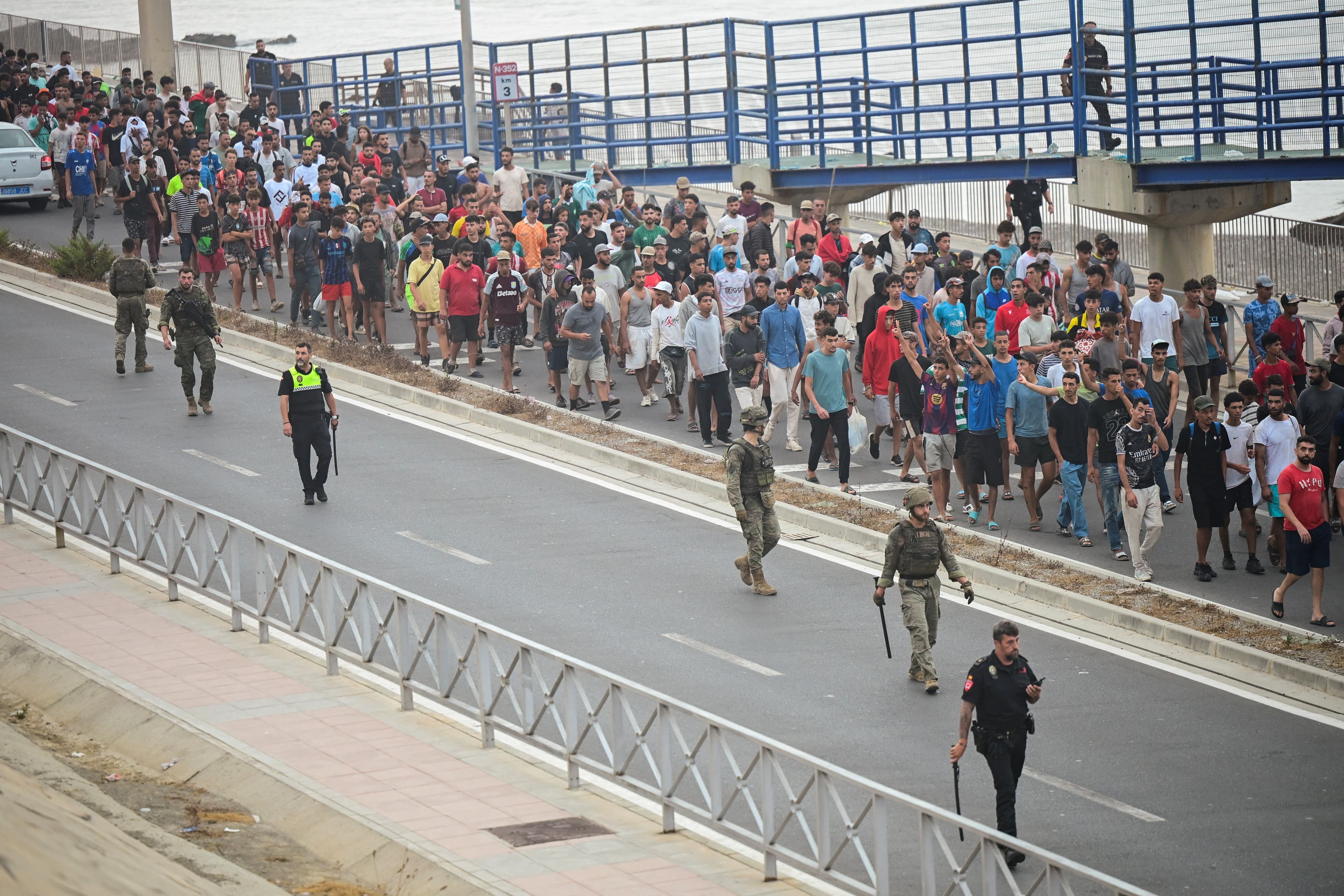
Hundreds of unaccompanied minors are stranded in Ceuta, the Spanish territory in North Africa, after a massive surge of migrants swam around the border fence with Morocco. An estimated 3,000 to 5,000 migrants, out of roughly 60,000 who arrived on Thursday, have avoided expulsion, and more than 800 unaccompanied minors among them face an uncertain future. Spanish law mandates protection for unaccompanied minors, but many lack food and shelter.
A 17-year-old girl from Tangier told the Associated Press she saw Spanish police pulling the body of her eight-year-old brother from the sea when she made it to shore, and she was separated from her mother during the journey. "I saw people stepping on the dead, she said through a translator. "Now we are children begging on the street.
After finding a government facility for youths in need full, she is relying on locals for food and shelter. Article 35 of Spain's 2000 law on foreigners' rights states that when police identify unaccompanied minors, they must be granted protection and receive "immediate attention" from Spanish child protection services. An AP journalist saw Spanish soldiers escorting an unaccompanied Moroccan boy who was crying and begging not to be sent back; due to pressure from local residents who insisted he was a minor, he was transferred to the Spanish Civil Guard instead of being repatriated.
Most Moroccan adults who arrived last week have voluntarily gone home or were pushed back by Spanish police. Among the remaining are significant numbers of Sudanese fleeing their war-torn country, Palestinians from Gaza, Afghans, and people from several African nations. The city's migrant centre is full, with a capacity for 600 people, and food is scarce. Many are sleeping outside or resting on the beach or hills surrounding Ceuta, with mainland Europe, their ultimate goal, lying across the sea in the hazy distance.
উৎস: Al Jazeera English