
विज्ञान
The Seabird Colony That Once Teemed With Life Is Now a Shadow of Its Former
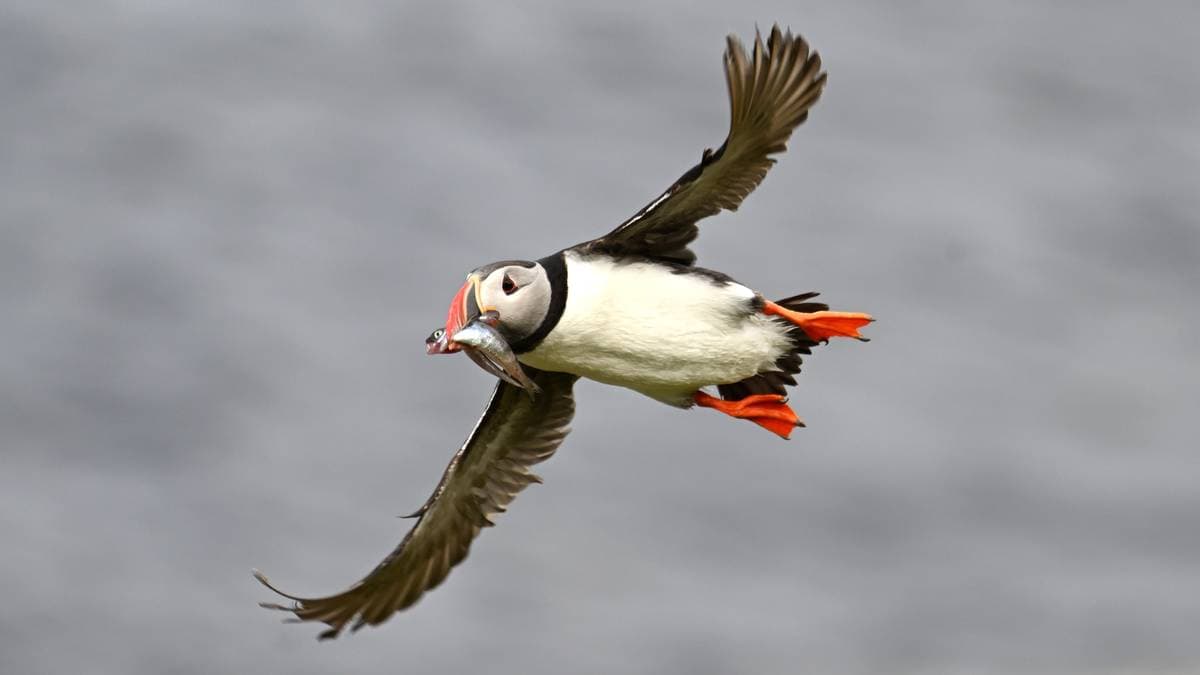
Nearly nine out of ten puffins on Røst are gone, and the remaining pairs are struggling to raise their chicks this year. Puffins on Røst now have to fly miles out to sea to find food, feeding their young with haddock instead of herring. For decades, the puffins on Røst have struggled to rear chicks.
So anticipation was high when seabird researchers from the Norwegian Institute for Nature Research (Nina) arrived at the archipelago in Lofoten in May. After seven to eight months far out at sea, puffins return to breed on Røst, and most birds use the same nest site year after year. Røst lies in the middle of the Norwegian Coastal Current, surrounded by the vast continental shelf off the Nordland coast.
This has historically made the islands a perfect habitat for huge flocks of seabirds. "The season didn't start well. When the eggs hatched, there was little food to find, and some puffin chicks died, says senior researcher Tycho Anker-Nilssen at Nina.
Since 1981, he has spent every spring and summer with the puffins on Røst, closely monitoring their decline. Puffins lay only one egg per season. The majority of Europe's puffins live in Norway.
"When we started monitoring puffins on Røst in 1979, there were 1.4 million breeding pairs. The result of this year's count shows a historically low population. Now there are only about 165,000 pairs left.
That means 88 percent of the Røst population has already been lost. "Last year, 208,000 pairs were recorded. The 20 percent decline from last year is unusually large.
We're keeping our fingers crossed that this is not just due to mortality, but that many birds have refrained from breeding, says Anker-Nilssen. Many chicks that survive and become fledglings do not survive the first tough period at sea, according to the Nina researcher. Food shortages in the ocean, directly linked to climate change and overfishing, are the main reason seabirds are disappearing, the researcher says.
If half of the puffin pairs manage to raise their chick this year, it is considered a moderately good season. For the Røst puffin population, that would be an improvement. Between 2007 and 2015, the crisis was at its worst on Røst.
"For nine consecutive years, the puffin population experienced what we call 'zero years, where not a single chick made it to fledging, says the researcher. In recent weeks, puffin chicks have been gaining between five and eight grams per day, which is relatively good, according to Anker-Nilssen. We have good hope that at least half of the pairs will produce viable chicks this year.
स्रोत: NRK