
পরিবেশ
Outside, Smoke Was Thick Enough to Burn Your Eyes, Said Robertson, a Red Cross Communications Director With 10 Years of Experience
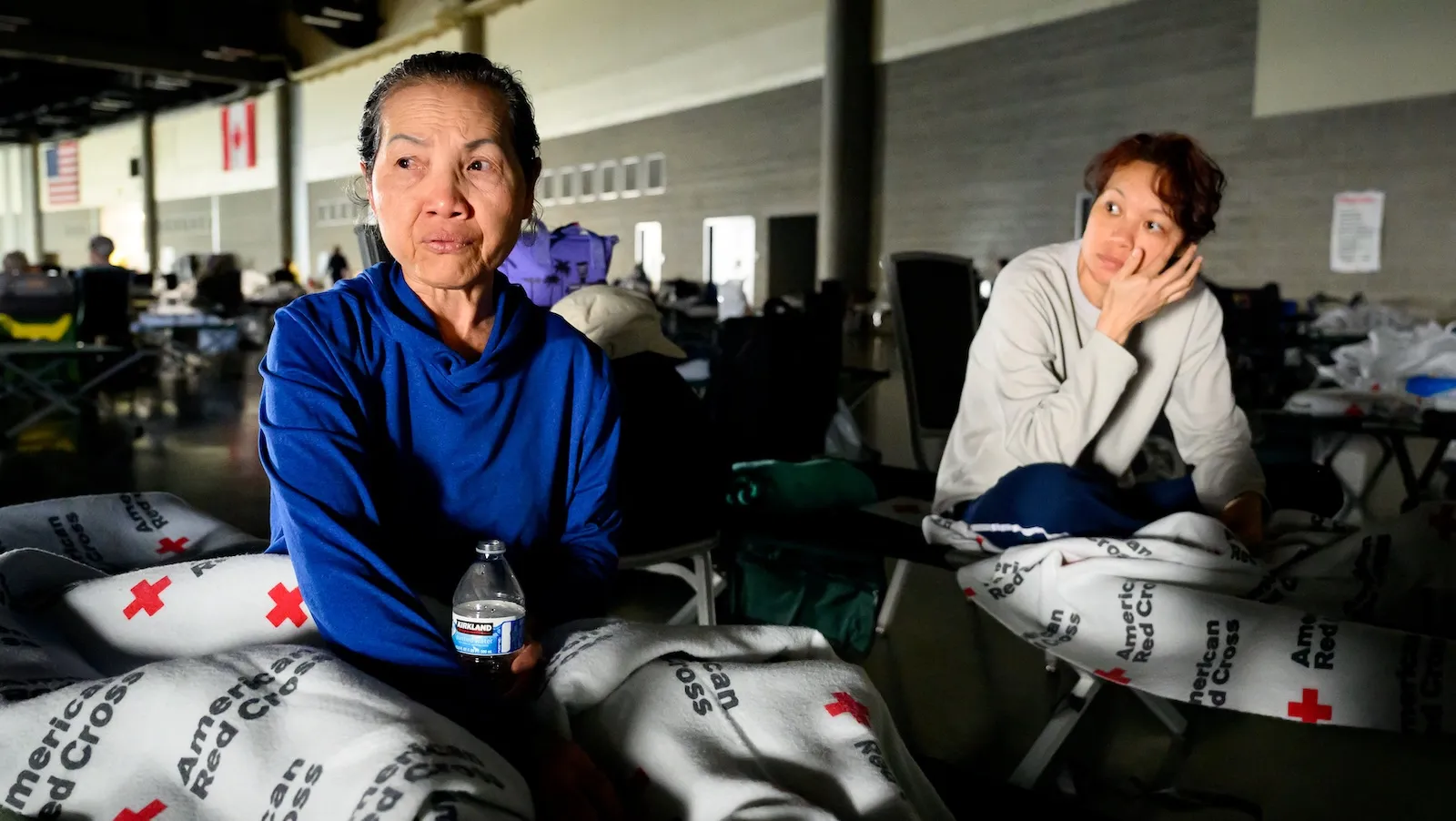
Betsy Robertson stood in the Spokane Convention Center on Monday, but the event space in Washington state's second-largest city had become a Red Cross emergency shelter as three wildfires, just miles away, destroyed entire neighborhoods. Nurses and volunteers moved among cots, ensuring hundreds of evacuees—from mothers with babies to elderly with caretakers—had blankets and food. Outside, smoke was "thick enough to burn your eyes, said Robertson, a Red Cross communications director with 10 years of experience.
"The scale of homes destroyed and lives changed forever—this is a new level, she said. "We are bracing ourselves for seasons like this getting worse and worse, and starting earlier and going later. A historically dry winter, extreme drought, and heat waves set the stage for hundreds of wildfires across the Pacific Northwest this summer.
Oregon recently broke its annual record with nearly 2 million acres burned. Washington is in its most destructive season on record, with over half a million acres burned and at least 65,000 residents ordered to evacuate. The three fires that started Saturday in the Spokane Valley destroyed more than 700 buildings by Monday afternoon.
"I've been trying to wrap my mind around how we're going to house all these folks, said Kitty Klitzke, a Spokane City Council member representing a hard-hit area. Many displaced are senior citizens and caretakers. "It's a miracle that, so far, we know of no fatalities and no reported missing people, Klitzke said.
As the planet heats up, conditions fueling extreme wildfires become more common. A warmer atmosphere holds about 7 percent more water vapor per 1 degree Celsius of warming, drawing moisture from soils and vegetation, leaving forests primed to burn. Rain falls more intensely but less frequently, causing drought.
"This fire, and what we're expecting to come, makes no sense unless you connect the dots through a changing climate, said Bob Freitag, former director of the Institute of Hazards Mitigation Research and Planning at the University of Washington. "The science is known, and this is not something that is a one-off. Paul Pastelok, a senior meteorologist at AccuWeather, cited a lack of snowfall.
Spokane had half its typical snowfall this year; other areas hit historic lows. Powerful winds carried hot embers from the 70,000-acre Little Giant fire in central Washington over 3 miles, sending flames across Lake Chelan. Ryan Rodruck, a communications manager at the Washington Department of Natural Resources, called the situation "extremely tragic.
High winds forecast for this weekend could worsen conditions, said Benjamin Cossel, a wildfire public information officer. The situation is comparable to the Los Angeles fires in 2025, he said, with urban settings making smoke especially toxic.
উৎস: Grist